Acted has been present in Tajikistan since 1996, contributing to addressing the country’s main challenges and fostering opportunities for sustainable and inclusive development, especially in rural and remote communities. Throughout the years, Acted has used a participatory, inclusive and multi-sectoral approach to respond to emergencies, build disaster resilience including through better natural resource management, and strengthen civil society.
Tajikistan faces a range of humanitarian and developmental challenges; chief among them the impacts of climate change. Globally, the Central Asian region – and Tajikistan in particular – is considered to be among the most vulnerable regions to climate change, with 53% of the population dependent on small-scale agriculture and over 80% of farmland reliant solely on rainfall. Extreme weather events (such as floods, droughts, avalanches, and landslides) regularly destroy land, crops, infrastructures, and livelihoods. In addition, as a result of climate change, those are further exacerbated by melting of glaciers, shifting raining patterns, prolonged droughts, among others.
Moreover, 31-44% of the population are food insecure, which makes vulnerable groups even further exposed to climate change risks.
Additionally, gender inequality and the marginalization of vulnerable groups persist. The ongoing instability in neighboring Afghanistan further compounds these issues, with a rising number of refugees seeking safety in Tajikistan.
Key development challenges
▪ Increasingly frequent and severe natural disasters exacerbated by climate change
▪ Unsustainable natural resource management
▪ Lack of income opportunities
▪ High outbound labour migration
▪ Gender inequality
▪ Dilapidated infrastructure
▪ Challenging operating environment for civil society actors
▪ Food insecurity
Acted in Tajikistan
Responding to the challenges posed by climate change within Zero Carbon strategic pillar, Acted is continuously developing it’s green programing in Tajikistan, and innovating through partnerships established within the framework of the 3ZERO House. Acted aims to: reduce the carbon footprint of our operations, in line with Acted’s organizational Greening strategy; ensure sustainable energy supply through business development for green energy; attract green financing; continue advocating for improved policy for the green economy (policy recommendations, public-private dialogue platforms, etc.); and promoting eco-tourism, including through establishing eco-certification schemes in Tajikistan.
Within the strategic pillar Zero Poverty Acted is developing its programming on sustainable, inclusive economic growth across Tajikistan. This includes comprehensive programmes to strengthen existing value chains and foster sustainable economic growth, especially in rural communities. In addition, these programmes create inclusive opportunities, especially for small entrepreneurs and social entrepreneurships, and with focus on strengthening women. Existing initiatives on MSMEs incubation and acceleration, and social entrepreneurship is enhanced.
In Tajikistan, Acted plays a leading role in strengthening local actors’ capacities to prevent gender-based and domestic violence and foster inclusive development by focusing on advancing women’s rights. To achieve this objective within the Zero Exclusion strategic pillar, Acted is encouraging the involvement of its local partners and civil society organisations by raising their awareness on the need to protect gender equality and social inclusion.
Acted’s conceptual approach to effective governance is based upon an empowered, pluralistic civil society, social cohesion, and effective and responsive public institutions, with the goal of developing and enhancing local civil society and social accountability mechanisms.
Main sectors of intervention:
▪ Integrated Natural Resources Management (INRM)
▪ Adaptation to Climate Change
▪ Disaster Risk Management (DRM)
▪ Green economy
▪ Inclusive rural development
▪ Digital economy and industries
▪ Humanitarian response
▪ Strengthening Civil Society
▪ Gender equality and fighting gender-based violence
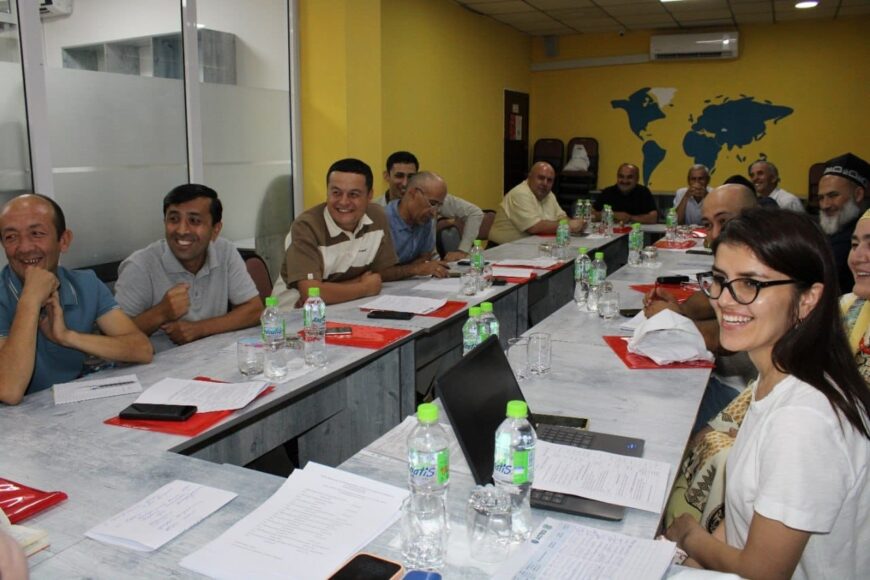
3 days training held in the framework of "Strengthening the capacity of civil society to ensure protection of women at-risks and survivors of domestic violence in Central Asia" on positive fatherhood
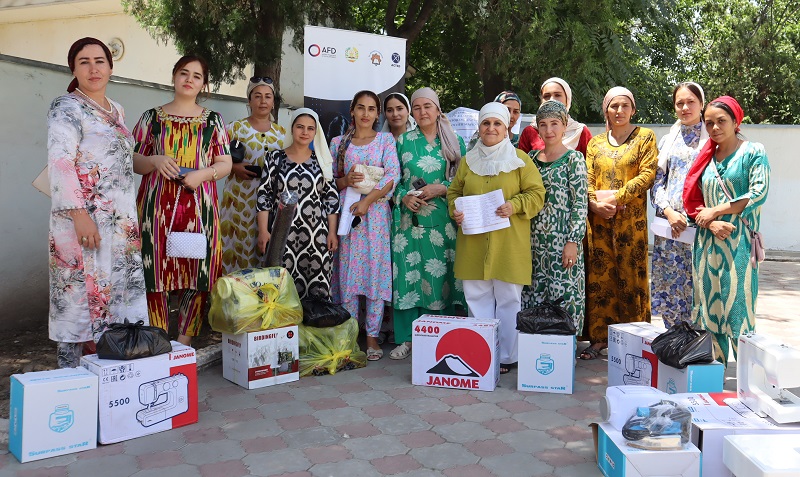
Acted and Public Organisation "Marifati Shahrvandi" visited project-targeted areas in DRS in the framework of "Strengthening the capacity of civil society to ensure protection of women at-risk and survivors of domestic violence in Central Asia"
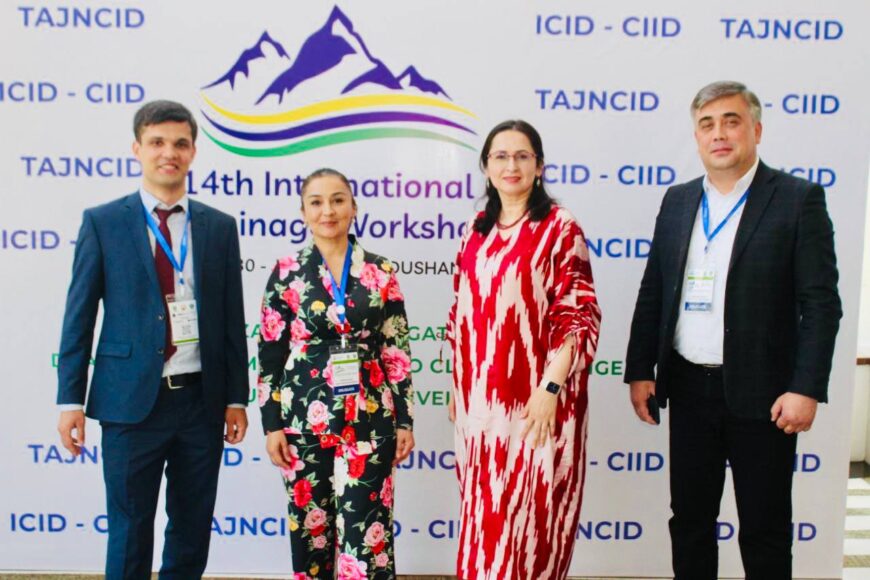
Acted supported the 14th International Drainage Workshop “Modernization of Irrigation and Drainage Systems to Adopt to Climate Change and for Sustainable Development” in Dushanbe, Tajikistan, in the framework of STREAM program.
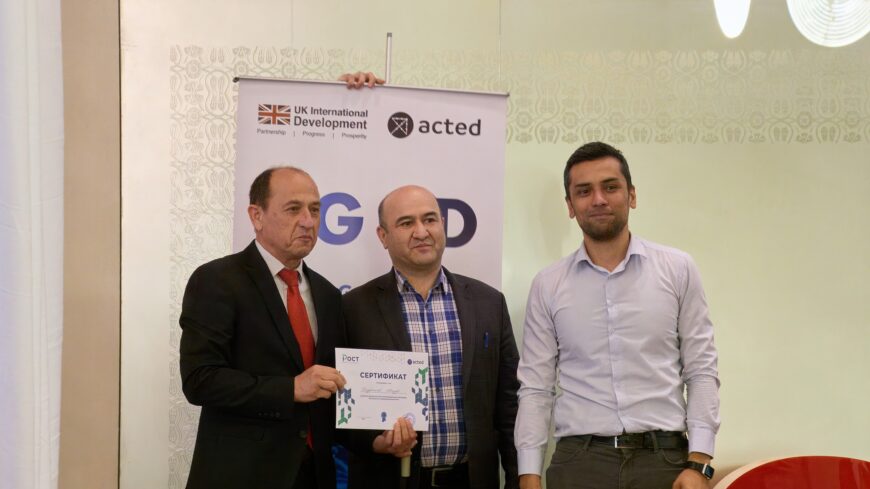
The social entrepreneurship project pitching was organized by ROST in Serena hotel in the framework of "Activating Civil Society to demand Inclusive, Evidence-Based Economic Growth in Central Asia" project, aimed at providing a platform for cooperation among public organizations from Khatlon, Sughd and DRS
Zero Carbon
Under its regional program STREAM, Acted in partnership with IMPACT Initiatives, provides targeted watershed level context, NRM and climate change analysis, stakeholder mobilisation and road map development with local actors and national governments (AGORA).
Responding to challenges posed by climate change, Acted provides under STREAM capacity building training, technical expertise and supports (secondment, equipment, etc.) and small grant schemes for stakeholders, its intervention addresses immediate and structural issues of climate change and land degradation in a holistic manner in rural rangeland ecosystems (THRIVE).
Zero Poverty
Acted pioneers dynamic, modern digital solutions to create new opportunities and strengthen the business environment in Tajikistan, to become increasingly entrepreneurship-friendly.
To ensure that communities and authorities are prepared and able to respond to natural disasters, Acted re-established its programming on disaster preparedness, mitigation and response. As such, Acted is strengthening its partnerships with national and local authorities, and is exploring new partnerships with local actors to strengthen existing capacity and response systems.
The project «Strengthening Civic Action towards achieving the SDGs» aims to strengthen inclusive development by engaging youth, promoting digital innovation, and encouraging social entrepreneurship. It focuses on fostering evidence-based policy dialogue with the government on issues of poverty, inequality, and the protection of vulnerable groups. By amplifying the impact of civil society organizations (CSOs) in alignment with the Sustainable Development Goals (SDGs), the project seeks to reduce vulnerability in the country (GOCA).
Zero Exclusion
Acted strongly believe that positive change comes from people. Acted continuously focusing on empowering and building capacity of civil society organisations to work for the benefit of their communities, promote inclusive and sustainable local development, and gender equality. We are utilising our signature Grassroots Organizations Capacity Assessment (GOCA) tool to strengthen CSO’s technical, financial and operational capacity.
Acted works closely with local authorities and CSOs to promote good governance through data-driven decision making with the aim to strengthen social cohesion, while also building social accountability mechanisms. Supporting effective cooperation between authorities and CSOs, Acted works with CSOs to support them to produce, analyse and use credible data for advocacy with authorities; to engage public-private dialogue on economic policy issues; and to develop the capacity of media to deliver data-driven, analytical reporting on economic policy.
Acted focuses it’s programing on promoting gender equality in Tajik society, aiming towards preventing gender-based violence through raising awareness for women’s rights across all layers of society, advocating for policy changes, supporting the establishment of local response mechanisms, and breaking gender stereotypes persistent in local culture. Acted is also broadening its existing youth artistic and economic empowerment programs (GOCA).
National Resource Management
Acted’s programme National Resource Management (NRM) within the flagship THRIVE aims to foster sustainable use of natural water and land (pasture, forest, climate smart agriculture) resources to fight poverty, prevent disasters and contribute to socio-economic development on a local level. By pioneering integrated watershed management planning, Acted is strengthening NRM capacities, improving communities’ disaster risk preparedness and response capacities, and empowering local civil society, especially women-led and youth organisations.
3ZERO House Tajikistan
The 3ZERO House Tajikistan is at the forefront of promoting inclusive economic opportunities by supporting MSMEs, start-ups, and civil society organizations through comprehensive capacity building. It also spearheads citizen-led climate initiatives, focusing on energy conservation and the adoption of renewable energy. Established by Acted Tajikistan in December 2022, the 3ZERO House serves as a unique collaborative hub that brings together civil society, public and private sector representatives, and other change-makers. United in their commitment to Zero Exclusion, Zero Carbon, and Zero Poverty, they work together to drive innovation and implement solutions to local challenges in climate change, economic development, and the inclusion of vulnerable populations.