Acted has been operating in Kyrgyzstan since 1999, working to address the country’s main challenges by fostering opportunities for sustainable and inclusive development, especially for remote and marginalised communities. Over the years, Acted has built diverse sectoral expertise and used participatory approaches to build resilience across an array of sectors. All of Acted’s ongoing projects strengthen the institutional capacity of partners, stakeholders and/or communities. As a result, Acted has long standing partnerships with communities, government agencies, civil society and international development partners.
Kyrgyzstan is located in the heart of Asia and boasts a rich history, influenced by and influencing diverse interactions and exchanges with its neighbours and the wider world. The country is home to 6.8 million people and has been called an island of democracy and openness in Central Asia since independence from the Soviet Union in 1991.
However, Kyrgyzstan remains one of the region’s poorest countries, with government data putting one-third of the population below the poverty line. Women and young people bear the brunt of the hardship, with every third child living in poverty. Gender inequality is a driver of poor economic performance, with women’s contribution to GDP 2.5 times lower than men’s. This unlocked potential reflects deeper social norms and barriers for full participation in society for women; nearly one in three women experience domestic violence.
Acted in Kyrgyzstan
For over 25 years, responding to the challenges posed by climate change, Acted continuously implementing projects that promote sustainable development and the green transition in Kyrgyzstan, in partnership with civil society, international partners and the government. In line with our Acted’s Zero Carbon strategy pillar in Kyrgyzstan we strive to: reduce the carbon footprint of our operations; ensure sustainable energy supply through business development for green energy; attract green financing; continue advocating for improved policy for the green economy; and promoting eco-tourism.
In Kyrgyzstan Acted is also constantly developing and implementing its programmes within the Zero Poverty strategic pillar, on sustainable inclusive economic growth across the country. This includes working with local development planning modalities to help create jobs and entrepreneurial opportunities for women and vulnerable groups. Moreover, Acted’s existing initiatives on MSMEs incubation and acceleration including social entrepreneurship, are strengthening the productivity and efficiency of different business sectors, such as in tourism and beyond.
In addition, Acted’s conceptual approach to effective governance is based upon an empowered, diverse civil society, social cohesion, as well as effective and responsive public institutions, with the objective of developing and enhancing local civil society and social accountability mechanisms. In line with the Zero Exclusion strategic pillar Acted promotes gender equality by preventing and responding to gender-based violence, breaking persistent gender stereotypes, and strengthening economic empowerment of women, youth and people with disabilities.
Main sectors of experience:
- Civil society development and good governance;
- Advancing women’s rights and preventing gender-based violence;
- Inclusive rural development and green transition;
- Climate change adaptation and resilience;
- Integrated Natural Resource Management (INRM);
- Disaster Risk Reduction (DRR), preparedness and emergency response.
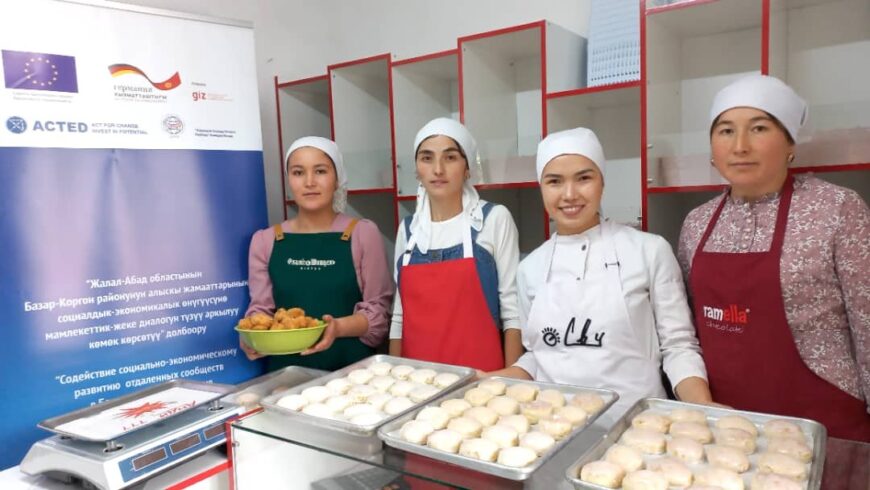
Public-private dialogue on socio-economic development of remote communities of Bazar-Korgon district in Kyrgyzstan
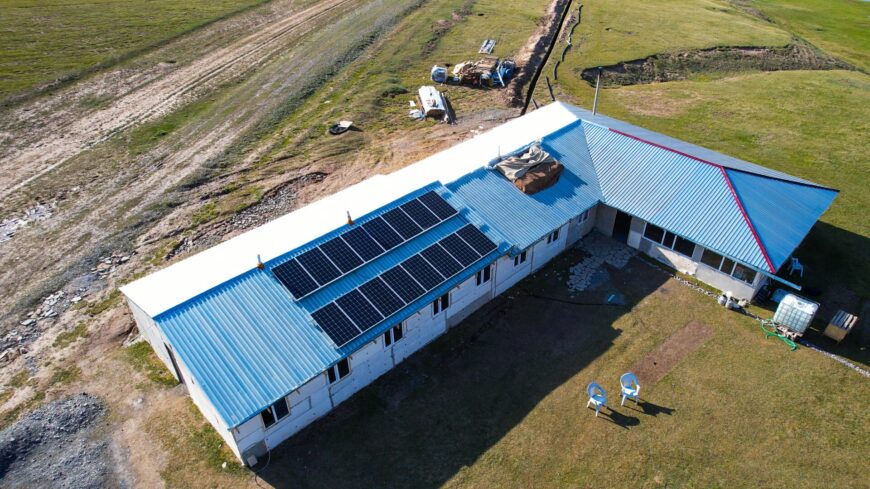
To improve energy efficiency of the Community-Based Tourism Sector in Kyrgyzstan Acted with the support of EU installed solar panels (within Set to Switch Project)

"Yntymak Week is the Peacebuilding Hub’s annual public initiative to celebrate local peacebuilding successes, share project
learnings, and explore new methods and approaches to peacebuilding in Kyrgyzstan"
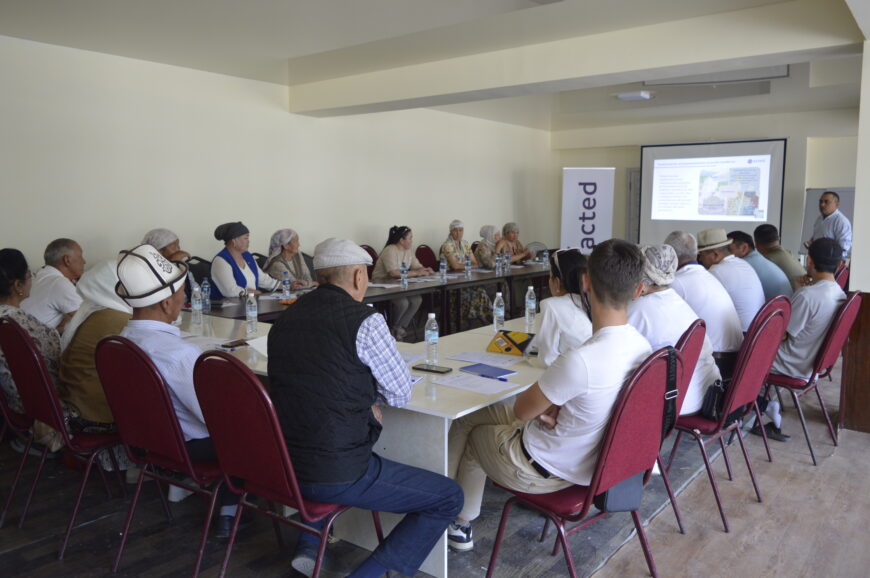
Four-day training sessions in Leilek and Kadamjay districts and field visits to potential water infrastructures
3ZERO in Kyrgyzstan
In Kyrgyzstan, Acted has been focusing on interventions towards the 3ZERO objectives to address the identified development challenges which are also in alignment with the Government of Kyrgyzstan’s National Development Strategy (NDS) and the Sustainable Development Goals (SDCs).
Zero Carbon
- Under its regional program STREAM, Acted in partnership with IMPACT Initiatives, provides targeted watershed level context, NRM and climate change analysis, stakeholder mobilisation and road map development with local actors and national governments (AGORA)
- Responding to challenges posed by climate change, Acted provides under STREAM capacity building training, technical expertise and supports (secondment, equipment, etc.) and small grant schemes for stakeholders, its intervention addresses immediate and structural issues of climate change and land degradation in a holistic manner in rural rangeland ecosystems (THRIVE)
- Under two projects aimed at sustainable development and green transition focusing on strengthening the community-based tourism sector known as the Silk-Road CBT Initiative as well as Set to SWITCH project aimed at reducing the carbon footprint of Central Asia’s CBT Industry, Acted has cooperation with its sister organization Oxus to provide efficient microfinance services.
Zero Exclusion
- By strengthening the capacity of civil society to ensure the protection of women at risk and survivors of gender-based violence (GBV) in Kyrgyzstan and Central Asia, Acted’s unique signature Grassroots Organization Capacity Assessment (GOCA), enables Acted to assess the capacity of CSOs and address provide tailored trainings (GOCA CSOs)
Zero Poverty
- To reduce poverty by enhancing the employment opportunities of women and integrating them into the labor market, Acted in Kyrgyzstan has been training vulnerable women in life skills and TVET (Technical and Vocational Education and Training)