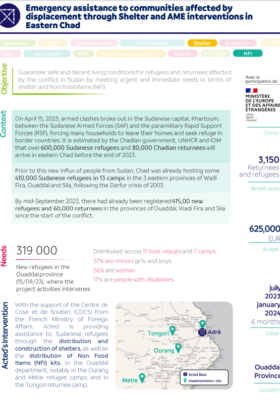
Acted has been operating in Chad since 2004, with a national coordination office in N'Djamena and three bases in Bol, Daboua and Adré. Its activities cover the Lac Province in the west and the Ouaddaï Province in the east, in response to the Sudanese crisis. The NGO provides a comprehensive response to the multi-sectoral needs of a population affected by both structural problems and economic shocks.
The crisis situation facing Chad is the result of a combination of structural factors (low human development, climate change and limited public investment) and cyclical factors (persistent conflicts, instability in neighbouring countries, economic crises, epidemics and natural disasters).
In 2024, 6 million people will need emergency humanitarian aid and support to strengthen their livelihoods. Of these, nearly 3.2 million are directly affected by food insecurity, 3.4 million have water, hygiene and sanitation needs and 1.6 million have education needs.
Since 2013 and the first incursions of Boko Haram, Acted has implemented projects in the Lake Province, notably through the Rapid Response Mechanism. In addition, since April 2023, when the conflict in Sudan broke out, Acted has provided multi-sector emergency assistance to many Sudanese refugees who have crossed the border.
Thanks to increased advocacy within the humanitarian community, in December 2023 Acted became the first NGO to support the UNHCR in camp and site management and humanitarian coordination.
Acted in Chad
Since 2013, Acted’s activities have expanded into the Lac Province, where it provides emergency assistance to vulnerable populations through programmes to combat food insecurity, nutrition, emergency shelter, water, hygiene and sanitation, emergency education and disaster risk reduction. Acted is also a member of the Rapid Response Mechanism (RRM) and a key WFP partner for food distribution and malnutrition prevention activities. Finally, in the Lac region, Acted is one of the few humanitarian actors to provide a response in the hard-to-reach border areas with Niger.
Since April 2023 and the outbreak of the Sudanese crisis, Acted has immediately deployed a multi-sectoral emergency response and has become a key partner of the Chadian government in supporting the management and coordination of the Adré temporary reception site, which hosts more than 170,000 refugees and returnees.
In summary, Acted Chad’s programme strategy is based around four areas of intervention:
- A flexible, multi-sector emergency response adapted to local contexts;
- Support for the management of displacement sites and humanitarian coordination;
- Access to a sustainable, inclusive and protective education system;
- Building community resilience based on local knowledge and resources.
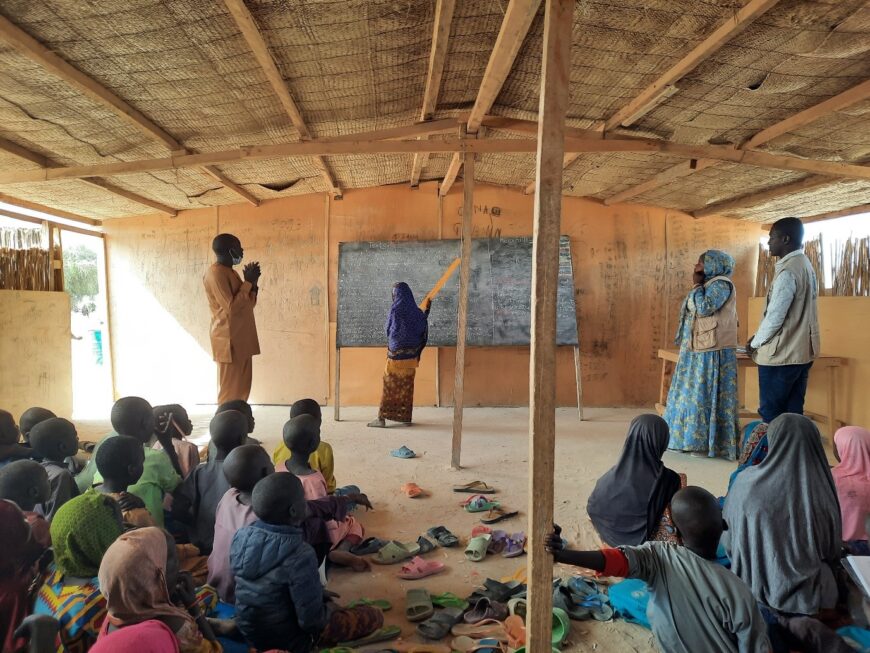
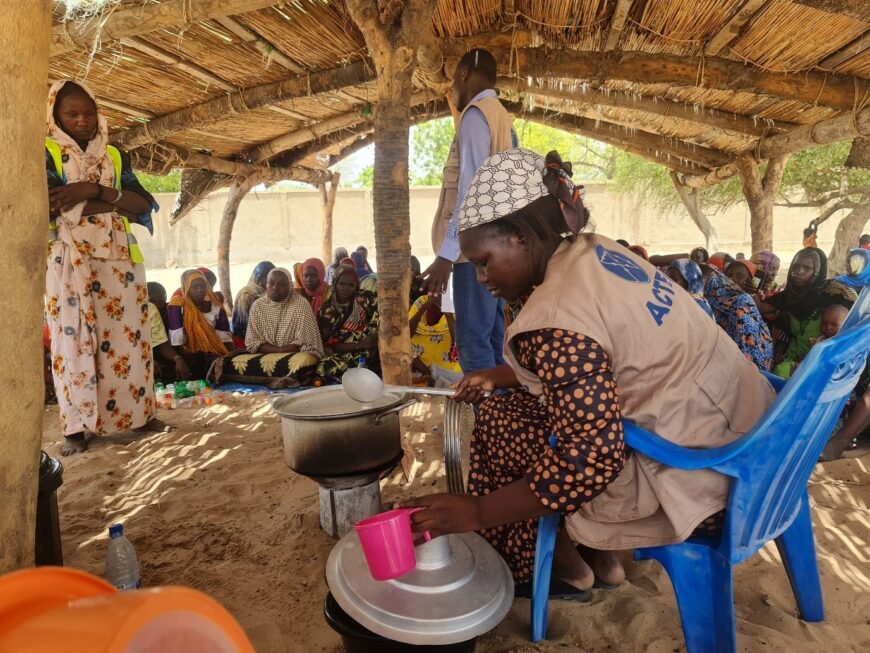
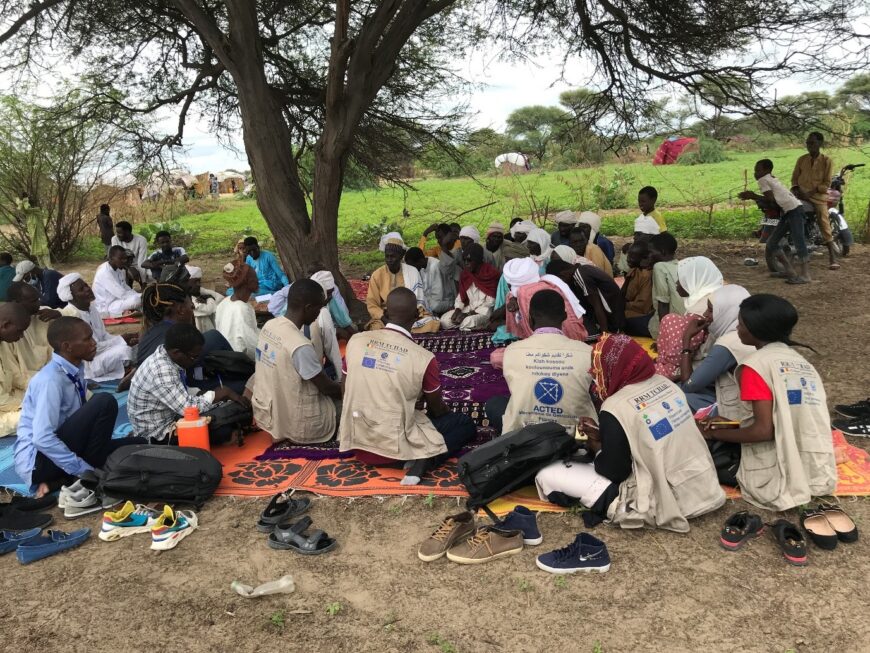
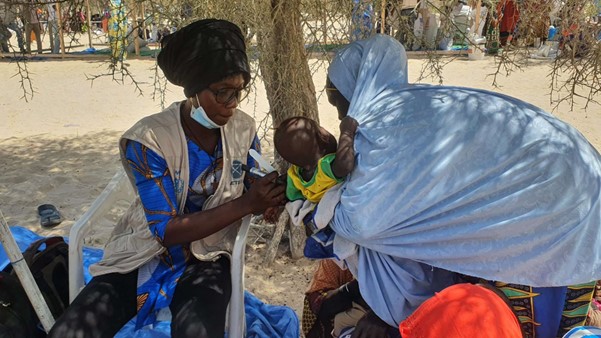
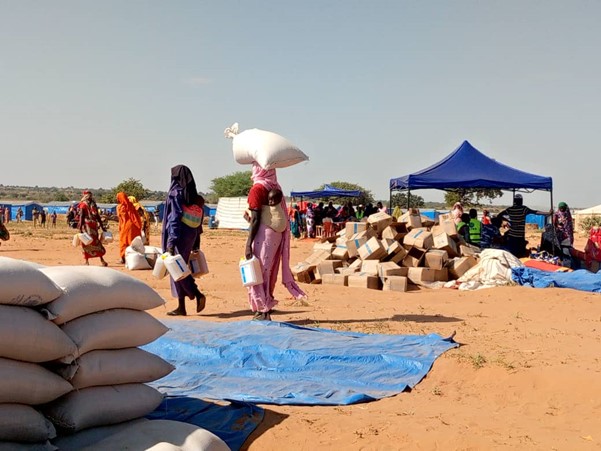
Acted Chad is working towards the 3ZERO objective by implementing pilot initiatives as part of its emergency programmes. In particular, Acted has planted almost 1,200 trees in 2023 through various reforestation operations, and also distributes improved cooking stoves that consume less fuel than conventional systems.
Multi-sector emergency aid for Sudanese refugees along Chad's Eastern border
Download
Emergency multisectoral response to the crisis of Sudanese refugees and Chadian returnees in Ouaddaï province
Download
Rapid Response Mechanism - Meeting the needs of populations affected by displacement in the Lac Province
Download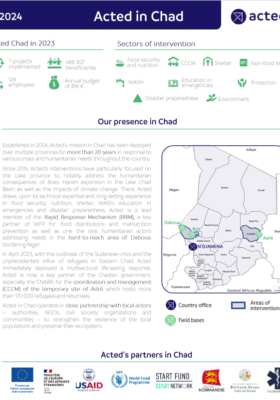
Emergency assistance to communities affected by displacement through Shelter and AME interventions in Eastern Chad
Download