In Kenya’s Tana River County, communities are facing increasingly unpredictable climate conditions that are affecting access to livelihoods and essential resources. Recurrent droughts, combined with seasonal flooding, are putting pressure on both pastoral and farming systems, making it more difficult for households to maintain stable sources of income and meet their basic needs.
As drought conditions persist, the Kenya Cash Consortium, led by Acted and supported by the Kenya Humanitarian Fund (managed by the UN Office for the Coordination of Humanitarian Affairs), is supporting vulnerable households in Tana River and Samburu Counties facing food insecurity. Through cash-based assistance, over 75,000 people will be able to meet their immediate needs in a way that reflects their priorities, while maintaining flexibility and dignity.
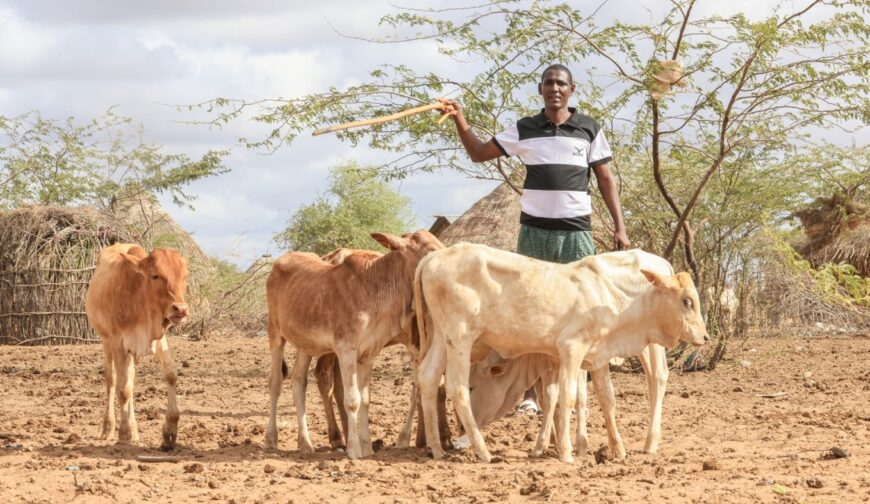
Abdi with his livestock in Dayate, Tana River County.
Photo by Leonard Odini
With two wives and six children, Abdi*’s story reflects the growing hardship many families in Kenya’s arid and semi-arid lands face when drought strips away livelihoods and hope. A pastoralist from Dayate Location in Tana River County, he built his life around raising and herding livestock. For years, that work enabled him to feed his family and keep his children in school. But as drought conditions intensified, everything changed.
The drought has brought so many challenges to me and my family. We used to keep more than 50 cattle, but now there is no pasture, no water, and some of our livestock have died.
Since 2022, Tana River County has been among the hardest-hit areas, facing both severe drought and sudden flash floods. For pastoralist families like Abdi’s, the changing weather patterns have destroyed their main source of income.
There is no money. The cattle that remain are weak, and I had to sell them at a lower price so my family could eat and my children could stay in school. We could no longer sell milk, yet that is what my family depends on. It was better to sell the livestock than watch them all die and lose everything.
As the crisis deepened, Abdi and his wives began travelling to nearby villages in search of casual work on other people’s farms, hoping to earn enough to feed their family.
I had to keep looking for other ways to earn money so my children could eat, but it has not helped much.
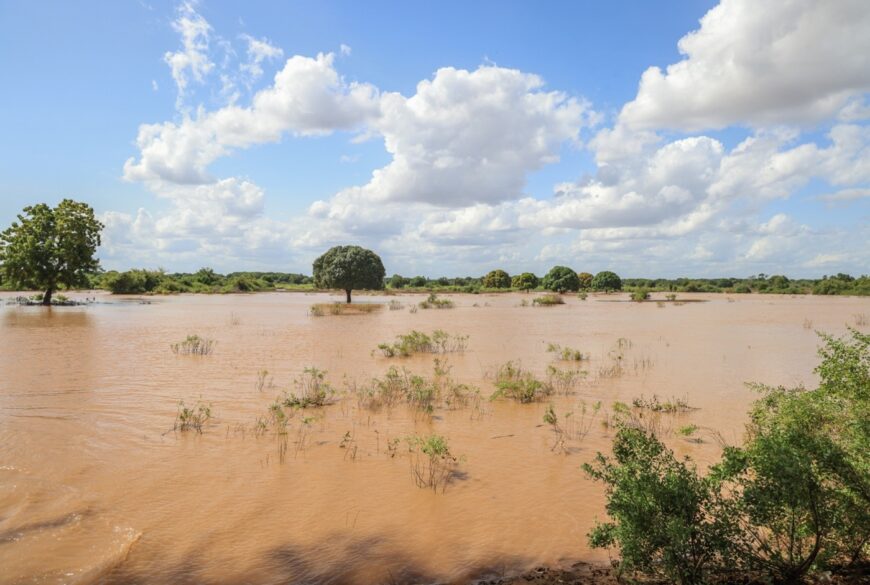
Floodwaters from the overflowing Tana River have submerged farms in Bondeni, Tana River County, destroying crops and livelihoods for families who depend on agriculture for their survival. Photo by Leonard Odini.
Near the banks of the River Tana lies Bondeni Location, where Abdi and his family often go to look for farm work. But the people living there are facing the same hardships.
One of them is Halima* . She lives in Bondeni and, together with her husband, depends on crop farming to survive. But drought and flooding have made even that uncertain.
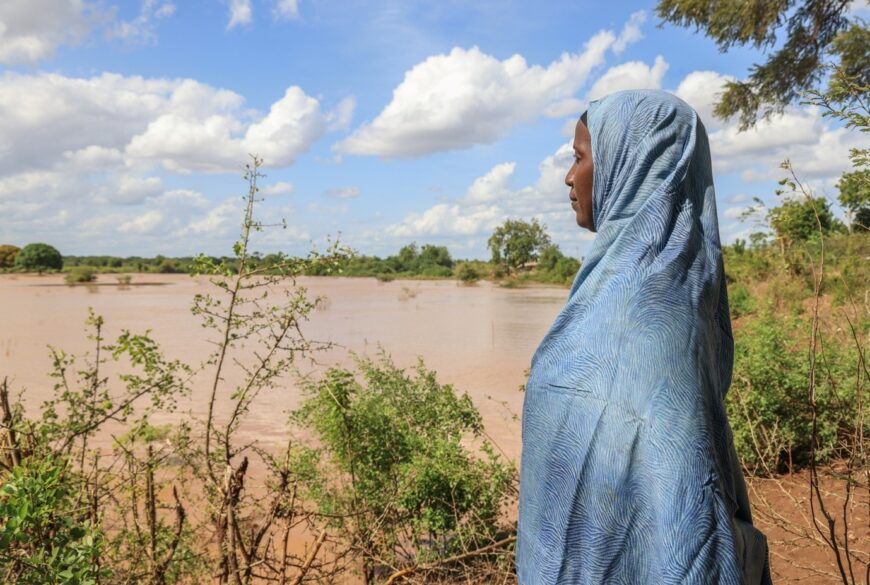
Photo by Leonard Odini
Halima looks over her flood-damaged farm in Bondeni, Tana River County. The overflowing Tana River destroyed crops and disrupted the livelihoods of families who depend on agriculture for their survival.
We plant maize, legumes, tomatoes and watermelon to earn a living, but with the drought it has become impossible. The crops dry up, and when the floods come, they are submerged.
To keep her family going, Halima takes on whatever work she can find. She washes clothes and cleans houses to buy food, while her husband looks for casual labour on construction sites.
Sometimes he earns 300 to 400 Kenya shillings, and sometimes there is no work at all, so we sleep hungry. That is what life is like for us now.
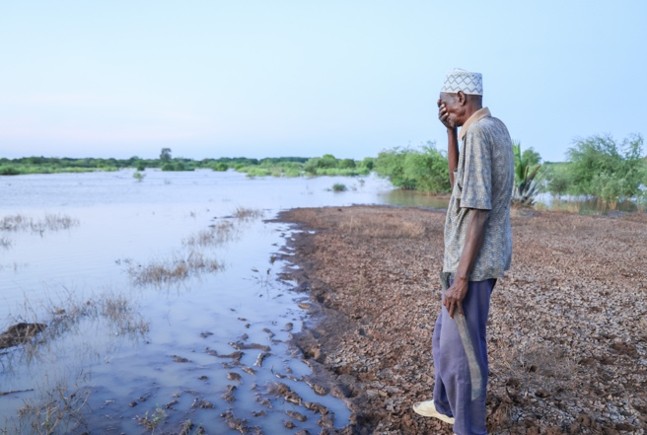
Photo by Leonard Odini
Families in Tana River County are grappling with the dual impacts of climate change, as prolonged drought and recurrent flooding occur concurrently. These overlapping shocks threaten the livelihoods of households that depend on crops and livestock.
Abdi and Halima are among thousands of households in Tana River County struggling with the effects of drought. As families fight to put food on the table and meet basic needs, many children are being pulled out of school to help their parents survive.
Local authorities are seeing the impact up close.
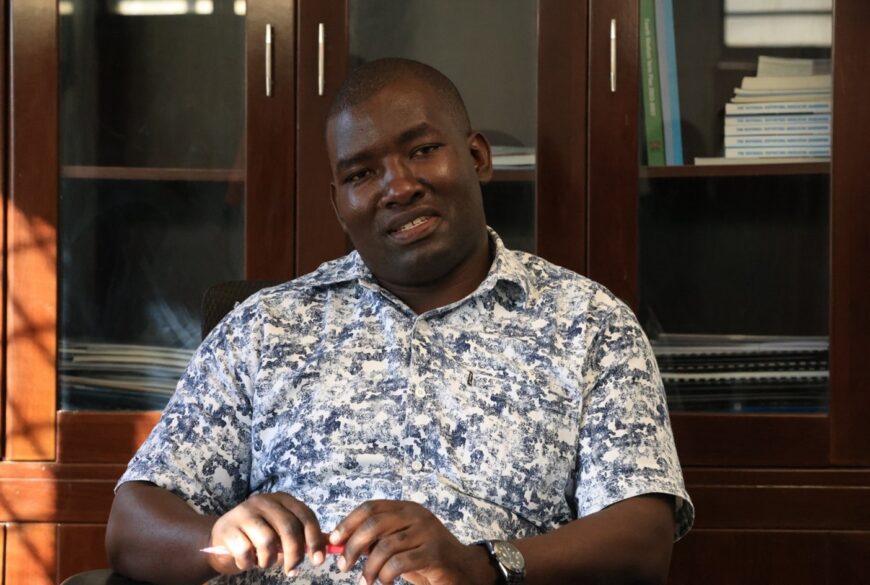
Timothy Ejilo, Assistant County Commissioner for Hola Sub-County, Tana River County. Photo By Leonard Odini
When severe drought hits, water becomes scarce and families have to walk long distances to find it. The same children who should be in school are sent to fetch water. When the weather turns harsh, that is how families try to survive.
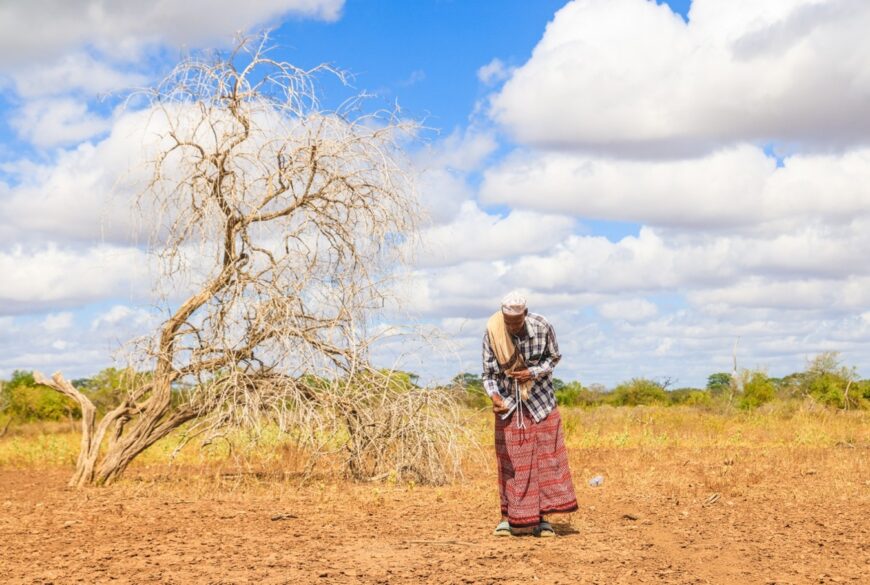
Photo by Leonard Odini
Salim stands on his farm in Wayu, Tana River County, where prolonged drought has left once-productive cropland barren. Acted.
Through a life-saving cash assistance intervention, the consortium will support affected households to meet their immediate food needs with dignity and flexibility.
I am grateful to Acted because this money will help me feed my family. I will use what remains to plant crops such as maize, so that in time I can continue supporting my children. We have always depended on pastoralism, but climate change is forcing us to look for other ways to earn a living.
When I receive the cash assistance, I will buy food for my family, take my children back to school, and buy seeds so we can continue farming, because farming is our livelihood here
For families like Abdi’s and Halima’s, cash assistance is more than short term relief, it is the difference between hunger and a warm meal, between children dropping out of school and the chance to keep dreaming of a better future. In Tana River, where drought and floods continue to uproot lives, this support offers not only survival, but also hope and dignity families need to begin again.

*Names have been changed to protect individuals’ privacy