According to data from the International Organization for Migration (IOM), as of May 2026, the Artibonite department had 158,358 internally displaced persons, 95% of whom were being housed by host families. Artibonite has also been facing a resurgence of suspected cholera cases since 2025 and remains structurally vulnerable to natural disasters, particularly hurricanes. It is against this backdrop that Acted, the AVSI Foundation, and IMPACT Initiatives are implementing the Rapid Response Mechanism (RRM) with financial support from the European Union (ECHO) and the U.S. Department of State (USDoS).
The RRM aims to provide emergency humanitarian assistance to populations affected by sudden shocks (armed violence, epidemics, or natural disasters) in areas where response capacities are limited or nonexistent. Since May 2025, more than 46,000 people have received assistance through this project.
A response built on speed and needs assessment
The RRM is a structured system designed to detect, assess, and respond to the needs of populations affected by a shock within 21 days of an alert being issued.
- Humanitarian monitoring. The RRM relies on a network of key informants comprising community members, local authorities, health workers, and other actors on the ground. This network enables the continuous reporting of information regarding new population displacements or other events likely to generate humanitarian needs. This information is then centralized and analyzed by teams from Acted and AVSI.
- Confirmation of the alert. Upon receiving an alert, teams have 48 hours to verify the information gathered, cross-check it with various sources, and determine whether an intervention is necessary. This step ensures the reliability of alerts before any deployment.
- The Rapid Multisectoral Assessment (RMA). Once the alert is confirmed, teams travel to the affected communities to assess their needs across several sectors: food security, water, hygiene, and sanitation; health; education; and protection. Conducted directly with households, this assessment—developed by IMPACT teams in support of Acted and AVSI—helps identify priority needs and target the most vulnerable households for potential assistance. The results are then compiled into a report shared with the humanitarian community to support coordination and guide complementary responses from other actors.
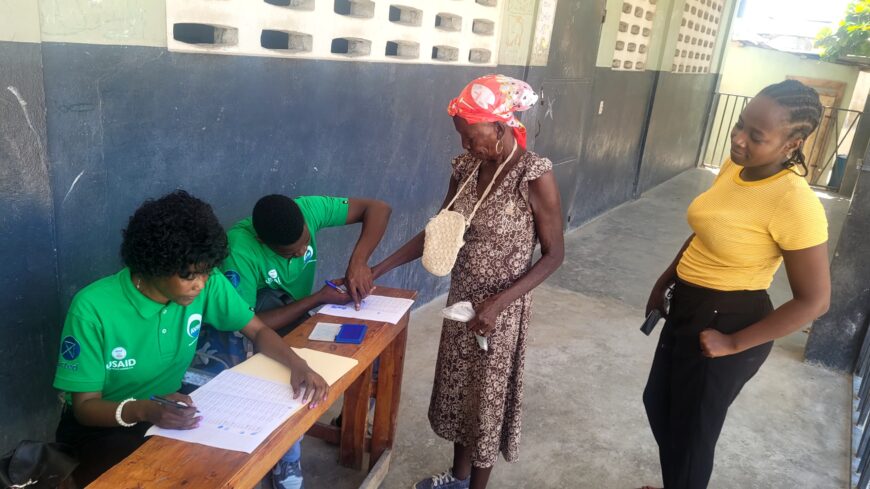
- Emergency Response. When the criteria and conditions for intervention are met, assistance is provided within 21 days of the alert’s publication. The preferred response modality is cash transfers: Multi-Purpose Cash Assistance (MPCA), funded by the European Union, as well as food security cash assistance funded by the U.S. Department of State.
Furthermore, the RRM Consortium integrates cross-cutting protection principles into all of its interventions, notably through the implementation of Rapid Protection Assessments (RPA) and the development of a mapping of protection actors in Artibonite, in order to refer households to the appropriate services when specific needs are identified.
Cash Transfers: The Primary Form of Assistance
Multi-Purpose Cash Assistance (MPCA) is the RRM’s primary intervention method. This approach is prioritized when local markets are functional and security conditions are deemed adequate (according to the WFP Market Functionality Index).
By directly providing households with the means to meet their priority needs, cash assistance offers them greater flexibility while preserving their dignity and their ability to make their own choices. Each household receives a transfer of 240 USD (31,400 HTG) to cover one month of essential needs. This amount is standardized nationwide in accordance with the recommendations of the Cash Working Group (CWG). During the hurricane season, the amount is adjusted to 192 USD to account for the specific response measures implemented during this period.
Preventing the Spread of Cholera Through a Rapid and Targeted Response
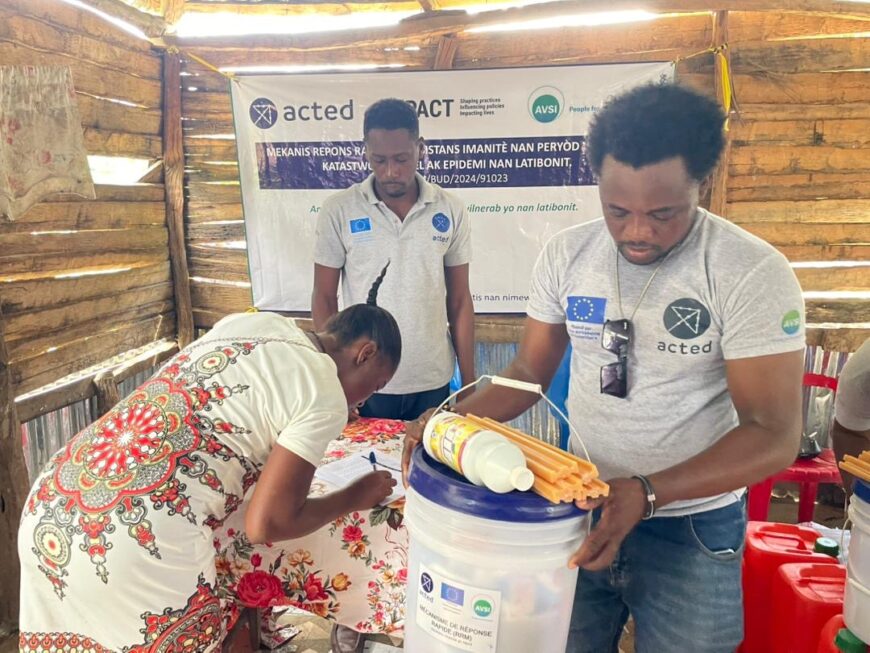
In response to the resurgence of suspected cholera cases in the Artibonite department—particularly in the municipalities of Marmelade, Saint-Michel-de-l’Attalaye, and Marchand Dessalines—the RRM Consortium, with support from the U.S. Department of State, has deployed a water, hygiene, and sanitation (WHS) response.
This intervention is based on the Case Area Targeted Intervention (CATI) approach, which aims to limit the risk of the disease spreading around identified suspected cases. For each reported case, hygiene kits are distributed to the affected household as well as to households living in the immediate vicinity, in order to strengthen preventive practices and reduce the risk of transmission within the community.
The response is being implemented in close coordination with the Artibonite Health Directorate (DSA), which oversees the other components of cholera management and control. This complementary approach enables a rapid and coherent response to affected communities.
Ensuring Continuity of Assistance Through a Partnership with the World Food Programme
Since December 2025, the RRM Consortium and the World Food Programme (WFP) have established a complementary mechanism aimed at extending assistance to the most vulnerable households beyond the emergency phase.
Through secure data-sharing agreements between Acted, AVSI, and the WFP, households assisted under the RRM can receive supplementary food support in the form of half-rations in kind distributed over four monthly cycles.
This collaboration ensures greater continuity of aid between the immediate emergency response and longer-term assistance mechanisms. It thus helps limit the risk of a deterioration in the living conditions of affected households and strengthens the coherence of the humanitarian response in Artibonite.
A Key Player in Humanitarian Coordination and the Emergency Response in Artibonite
Beyond implementing emergency interventions, the RRM Consortium actively contributes to humanitarian coordination in Haiti. It participates in the main national and departmental coordination bodies, notably the national Inter-Cluster Coordination Group (ICCG) and the Artibonite ICCG, to share analyses on population movements and evolving humanitarian needs.
The Consortium also plays a leading role in strengthening the coordination of cash interventions in the department. As such, it is in the process of being formally designated as a co-lead of the Cash Working Group (CWG) in Artibonite, alongside humanitarian actors operating in the area. This initiative aims to improve the harmonization of practices, transfer amounts, and targeting approaches among the various partners working in the cash sector.
IMPACT Initiatives, responsible for information management within the Consortium, ensures the quality of the data collected and the analyses produced. The information generated by the RRM thus informs humanitarian coordination mechanisms and contributes to a better understanding of the situation in Artibonite, benefiting the entire humanitarian community.
More than just an emergency mechanism, the RRM is now an essential tool for ensuring a rapid, coordinated, and needs-based response for populations affected by crises in the Artibonite department.