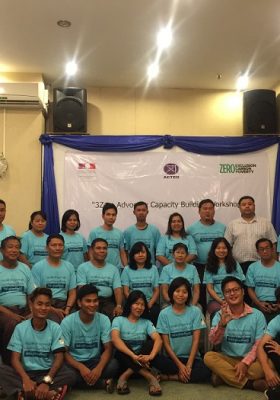
Acted launched operations in Myanmar in August 2008, focusing on providing emergency relief whilst actively building towards resilience. Since then, it has expanded operations into Rakhine State, Yangon Region, and Southern Shan State, working on food security, livelihoods, water, sanitation and hygiene, social cohesion, and protection assistance. To ensure the sustainability of its action, Acted places localisation at the core of its strategy and interventions in Myanmar, leveraging the strengths of grassroots organisations, and strengthening the capacities and know-how of local civil society actors to meet local needs. In Myanmar, Acted therefore operates under the 3Zero Programmatic pillars of Access to Basic Services, Institutions and Civil Society Strengthening, and Inclusive Economic Opportunities.
Myanmar’s complex and multi-faceted humanitarian crisis is characterised by armed conflicts, inter-communal tensions, and vulnerability to natural hazards. The events of 1 February 2021 have exacerbated these pre-existing vulnerabilities, leaving 18.6 million people in need of humanitarian assistance in 2024 (or over a third of the country’s total population) and over 3.3 million internally displaced persons by August 2024. Compounding these vulnerabilities, Myanmar is consistently ranked as one of the most vulnerable countries to climate change, with a propensity for flooding and cyclones – Cyclone Mocha affected over 3.4 million people in May 2023.
All of the above, combined with rising poverty – with close to half of Myanmar’s population living below the national poverty line14 – and high inflation (forecasted at over 15% in 2024), 18.6 million people in Myanmar are in need of humanitarian assistance. To address their needs, Acted has been building the capacity of local actors, and providing critical interventions on food, livelihood, WASH, protection, and social cohesion assistance.
Acted in Myanmar
From the outset of its operations in Myanmar in 2008. Acted has become a key actor in Myanmar, providing life-saving assistance to disaster-affected communities, while actively contributing to their recovery and future resilience. With localisation at the core of its strategy in Myanmar, Acted reflects a participative and holistic approach, and leverage the strengths of grassroots organisations in order to ensure the adequacy of its interventions and reach the most vulnerable and hard-to-reach communities. Acted therefore builds the capacity of local actors, empowering them to play an active role as first-line responders to local needs. Through the establishment of equitable and long-term relationship with local actors, and the provision of integrated and gender-responsive assistance, Acted then contributes to addressing the needs of vulnerable populations, strengthening their resilience and self-reliance.
GOCA
As part of its localization strategy, Acted uses its dedication Grassroots Organizational Capacity Assessment (GOCA) approach. The capacity of all local partners is assessed using the GOCA tool at the start of the partnership. Based on the findings, Acted provides partners with dedicated trainings on topics such as fundraising, reporting, financial management, HR, or other topics as prioritized. Trainings are delivered by Acted staff, to ensure both the quality of the training and continuous support following the training, ensuring an effective transfer of knowledge and guaranteeing the quality of partner operations. Acted moreover supports the technical capacity-building of partners, by facilitating training and backstopping on thematic areas, including entrepreneurship, sustainable agriculture practices, gender equality and disability inclusion, to further strengthen the quality and accessibility of basic services in Myanmar.
3ZERO House
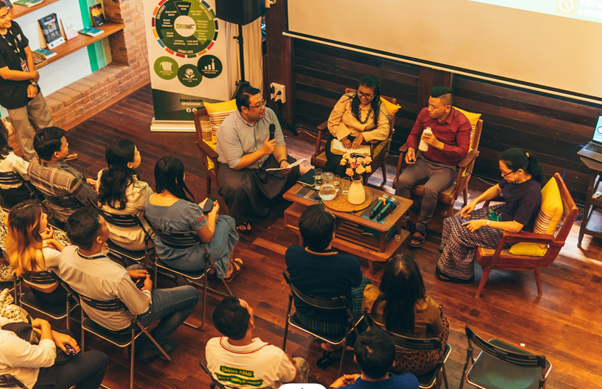
In November 2023, the 3ZERO House in Yangon was opened, a community-space that aims to address various challenges in the country’s current context, including youth unemployment, increasing poverty, and the need to support local civil society organizations and entrepreneurs. The 3ZERO House offers a variety of programs and services aimed at empowering youth and young entrepreneurs, focusing on innovation, climate-smart agriculture, and waste management.
Acted invites you to join the 3ZERO Myanmar Platform! [BUR]
Download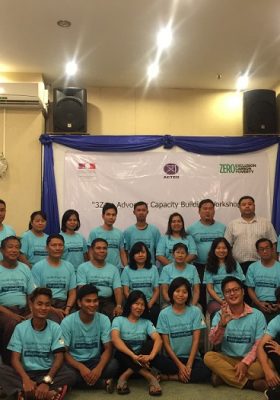
Acted invites you to join the 3ZERO Myanmar Platform! [ENG]
Download