Thi Qar, in southern Iraq, is one of the regions most affected by climate change. Rising temperatures, declining rainfall and repeated episodes of drought are severely disrupting the daily lives of local communities. For families who depend on agriculture, these challenges not only threaten their harvests, but also put their livelihoods and their children's futures at risk.
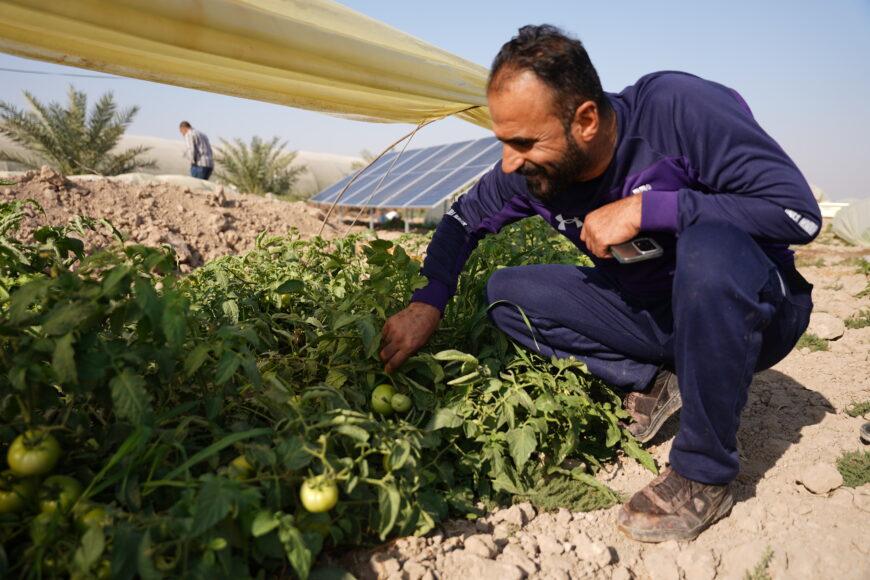
As the effects of climate change become more widespread, water becomes scarcer and the soil deteriorates, farming is becoming increasingly difficult. With rising production costs making farming unprofitable, families are often faced with difficult choices to survive, and many are forced to leave everything behind to seek new opportunities elsewhere. These climate pressures increase the vulnerability of rural communities and place additional strain on already fragile livelihoods.
Before, farming was easier: water was available, equipment was affordable, and pesticides were effective and cheap. But over the last three to four years, everything has changed.
In response, since 2024, Acted—with the financial support of the European Union through its Civil Protection and Humanitarian Aid Operations (ECHO)—is working with farmers, communities and local authorities in Thi Qar to enable them to adapt to these pressures by providing knowledge, tools and sustainable techniques that can help preserve their livelihoods and strengthen their preparedness and resilience to immediate and future climate-related risks, including water scarcity.
Because of water scarcity and the loss of agricultural livelihoods, many people have sold their livestock, left the area and now work as laborers on other people’s land. Young people, in particular, struggle to find work after losing farming opportunities.
Targeting Communities Most Affected by Climate-change and Water scarcity
Acted’s assistance focuses on areas identified as most exposed to water scarcity through the Area Based Risk Assessment (ABRA) conducted with IMPACT Initiative in Al-Dawaya and Al-Gharraf. The assessment revealed that 72% of farmers had seen their agricultural activities negatively affected by water scarcity in the past year, and 74% had faced irrigation water shortages.
In our area, we have water only on Fridays and Saturdays, and what we do receive is barely enough to meet the needs of our greenhouses. Our fields are ploughed and ready, but without water, we cannot cultivate them
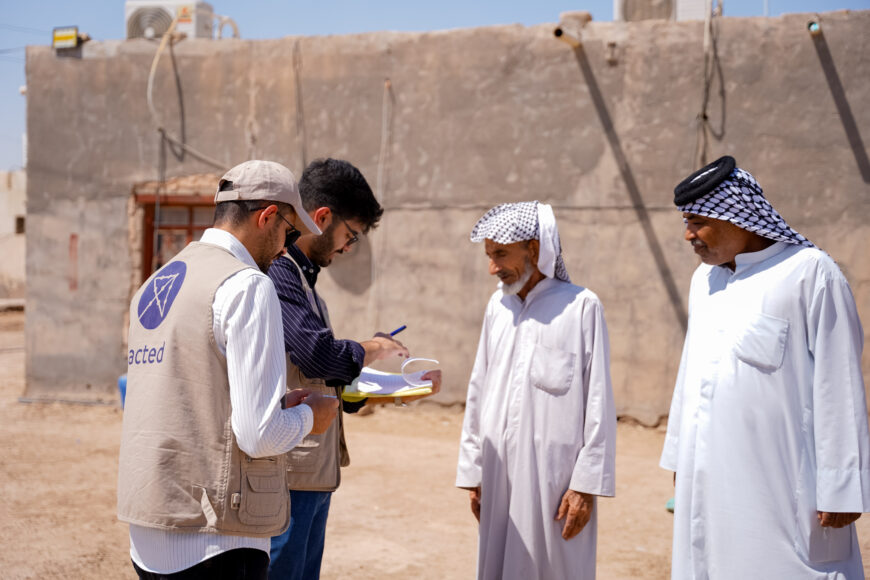
Despite these challenges, many still rely on traditional flood-irrigation, which consumes high volumes of water at a time when resources are increasingly limited. Farmers also highlighted that the absence of modern irrigation systems—and the financial constraints preventing them from investing in such equipment—remain major obstacles to reducing drought-related risks.
Most of farmers depend on petrol- and diesel-powered pumps, but they are expensive to operate, often broke down, and create constant difficulties
Introducing water-efficient production systems
In response to these challenges, Acted is supporting farmers to adopt modern and sustainable water-management practices, in collaboration with local authorities. 70 small-scale farmers from four villages participated in a practical five-day training course on climate-smart agriculture. The training covered water-efficient irrigation methods, soil and crop management, integrated pest control, and the use of renewable-energy-based solutions to reduce production costs.
Acted collaborated with the Directorate of Agriculture, the Directorate of Agricultural Extension, and the Agriculture College of Thi Qar University to train institutional staff, who then delivered the sessions to farmers. This approach strengthens local capacities and ensures that knowledge will continue to be shared long after the project ends.
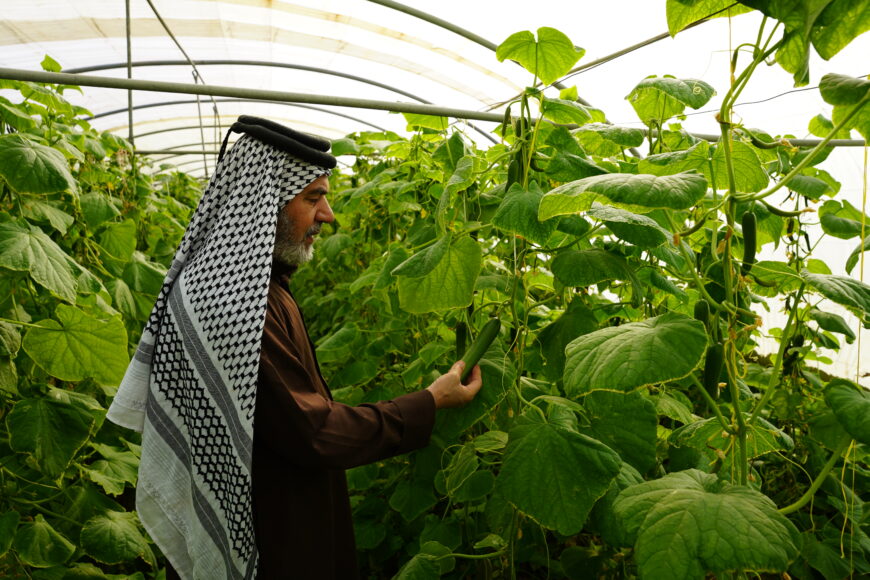
Following the training, participating farmers received agricultural tunnel kits enabling them to construct 8 to 12 protective tunnels each, equipped with drip irrigation systems. These tunnels support off-season production of vegetables such as tomatoes, eggplants, okra and cucumbers. By extending the growing season, increasing yields, and boosting incomes, they offer farmers a tangible way to adapt to rising temperatures and unpredictable rainfall.
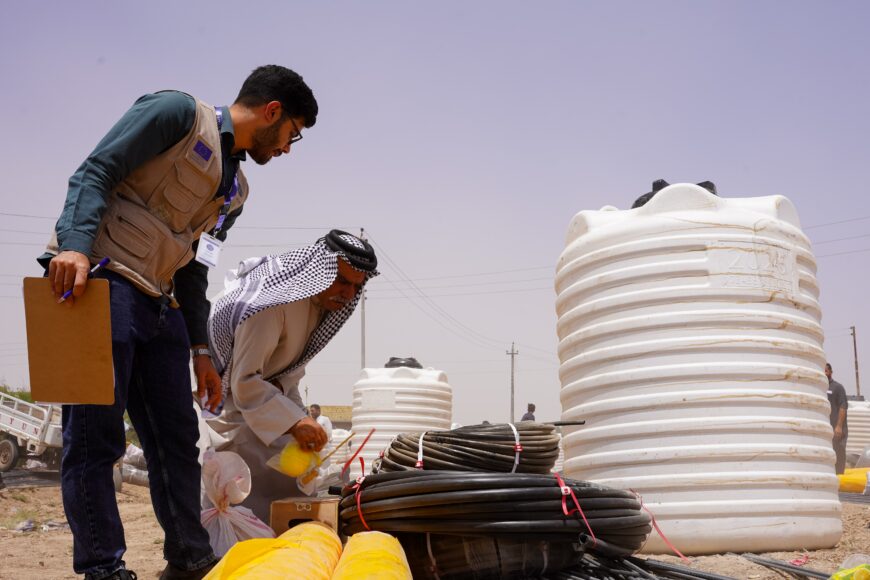
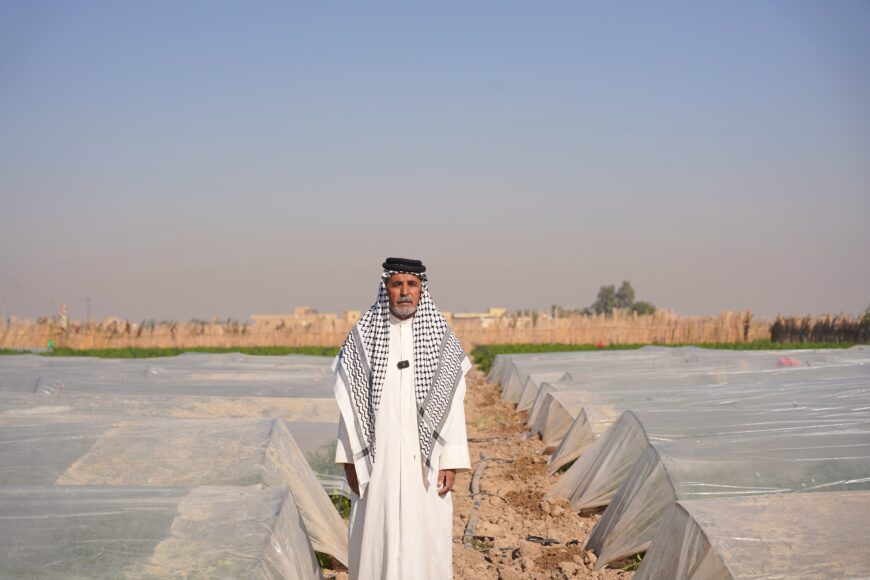
The drip irrigation systems provided with the tunnel kits offer a water-efficient alternative to traditional flood irrigation. By applying small, steady amounts of water directly at the root zone, they significantly reduce evaporation and runoff. Each system can irrigate up to 15,000 m² of farmland, allowing farmers to maintain production even as water becomes increasingly scarce.
Solar-Powered Irrigation for Greenhouse Farmers to Strengthening livelihoods and reducing climate-related pressures
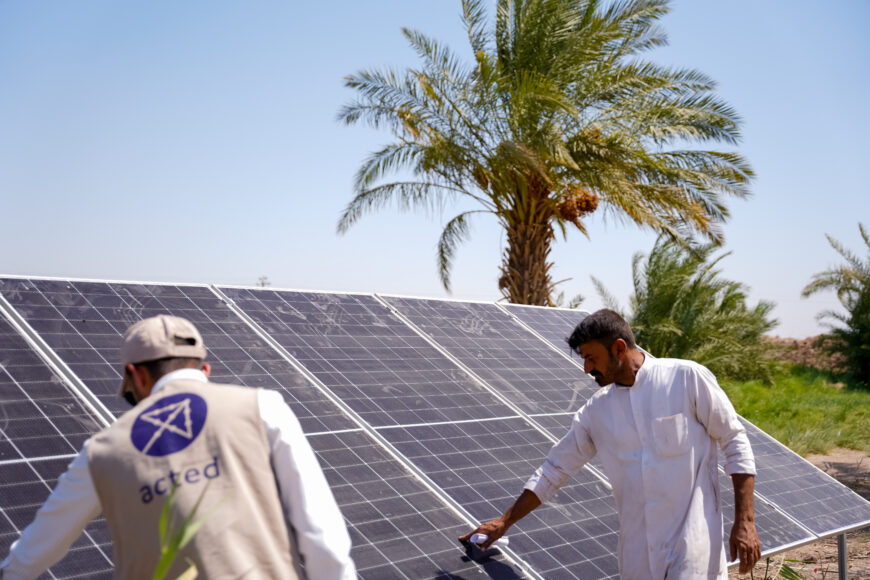
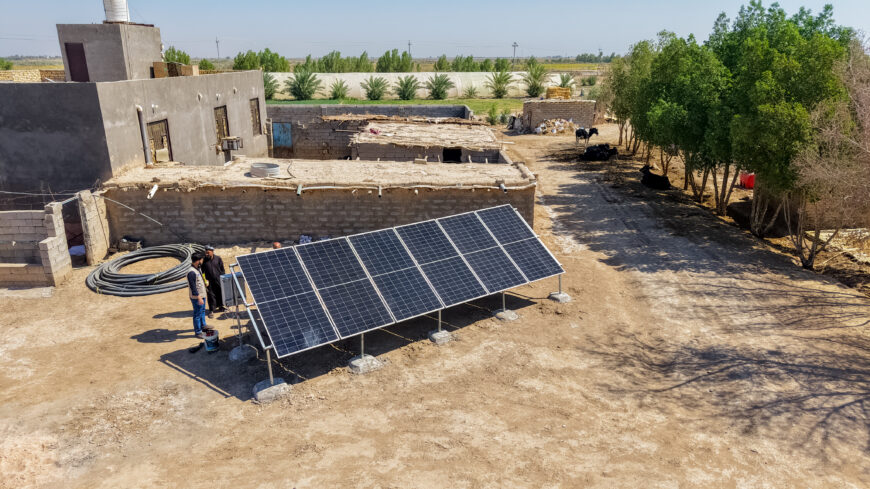
In parallel, Acted supported 100 farmers who already had government-installed greenhouses by equipping them with solar-powered Standard Drip Irrigation (SDI) systems. This combination—solar energy and precision irrigation—directly addresses the dual challenges of water scarcity and rising energy costs.
default
Solar-powered SDI systems offer several advantages:
· A reliable energy supply for irrigation: Solar power ensures that pumps can operate consistently, even in remote areas with limited access to electricity.
· Lower production costs: Solar energy reduces or eliminates fuel expenditures, making irrigation more affordable for small farmers.
· Reduced dependency on diesel: Farmers avoid price fluctuations, fuel shortages, and the environmental impacts of diesel consumption.
· Sustainability and climate resilience: Solar-powered irrigation enables farmers to water their crops precisely when needed—an increasingly critical factor as heatwaves intensify and water stress grows.
By helping farmers use water more efficiently and stabilize crop production, Acted’s interventions support not only individual households but entire communities. Approximately 500 family members benefit indirectly from more reliable harvests and improved livelihood security.
Acted’s distribution of modern and sustainable solar-powered irrigation systems was a lifeline. It saved us from spending money on fuel, helped us cope with electricity cuts.
Since Acted supported us with the installation of a complete solar-powered drip-irrigation system, we no longer have to rely on costly petrol or diesel pumps. This made it possible for us to adapt to the changing conditions and continue farming despite the challenges.
Sustainably strengthening livelihoods and reducing climate-related pressures
Through these efforts, Acted and the European Union provide practical, long-term solutions to climate-induced water challenges. By combining modern irrigation technologies, renewable energy systems, and local capacity-building, the project helps farmers adapt to changing environmental conditions while strengthening the resilience of entire communities. Families can sustain their agricultural livelihoods, remain on their land, and look to the future with greater confidence despite increasing water scarcity and climate stress