Acted has been present in Somalia since 2009, actively delivering life-saving assistance coupled with resilience and recovery programming to crisis affected communities. Acted has implemented consecutive successful multi-sectoral programming in Bay, Bakool, Lower Shabelle, Gedo, Lower Juba, Banadir, Togdheer, Marodijex, Sool, and Sanaag regions, delivering Food Security and Livelihoods (FSL), water, sanitation, and hygiene (WASH), Camp Coordination and Camp Management (CCCM), Shelter and Non-Food Items (NFI) assistance, livelihoods including agriculture, Climate change adaptation, as well as peacebuilding programming.
In Somalia/land, three decades of political instability, economic stress, clan conflicts and climate change have compounded the country’s vulnerability. Over 6.9 million people are in need of humanitarian aid, and 3.8 million people are internally displaced. Climate change and natural disasters have direct consequences on food security and the capacity of the population to produce agriculture, feed their livestock, and feed their families. The floods coupled with drought had negative consequences on an already vulnerable population: destruction of infrastructures, millions of hectares of lands inundated, loss of livestock. About 4 million people are expected to experience high food insecurity in 2024.
While Somalia is facing a humanitarian crisis, there is also the need for a longer-term response to enable populations to cope with future shocks, including as a result of climate change to which Somalia is particularly vulnerable. Acted contributes to climate change adaptation and mitigation through a variety of initiatives including agriculture programming, support to agro-pastoralists and land regeneration. Noting that climate change also has a direct impact on peace, exacerbating conflict over access to resources – both natural (land, water, livestock) and human-made (infrastructure) – Acted also supports peacebuilding and works with women-led civil society organizations as key actors of social change.
Acted in Somalia
Since 2009, Acted and its partners have been delivering life-saving assistance coupled with resilience and recovery programming to crisis affected communities. This includes the provision of multi-purpose cash assistance (MPCA) and food assistance through cash transfers to vulnerable households to support them to meet their basic needs. Acted also addresses WASH needs by facilitating the construction and rehabilitation of water assets including boreholes, shallow wells, and latrines complemented by hygiene promotion activities. In Somalia, Acted is also one of the major actor in Camp Coordination and Camp Management (CCCM) sector – with a coverage of more than 346 IDP sites and a total of 460,000 IDPs assisted in 2023. Acted also started the implementation of a peacebuilding project, enabling women-led Civil Society Organizations (CSOs) to lead self-designed local peacebuilding and conflict prevention initiatives in Jubaland and South-West state of Somalia. Furthermore, Acted implements projects in order to improve food and nutrition security and contribute to climate-change adaptation, food, fodder, and water security through its THRIVE Flagship initiative – with a focus on Regenerative Earthworks and Vegetation in Vulnerable Ecosystems (REVIVE) – to respond to the multiple needs of the communities. Finally, Acted applies the graduation approach to build the resilience of vulnerable communities in Southwest State and enhance their economic opportunities.
In Somalia, Acted is working simultaneously towards the 3ZERO objective and the flagship programs:
- Towards Holistic Resilience in Vulnerable Environments (THRIVE) – to address both the immediate and structural issues of climate change and land degradation in a holistic manner in rural rangeland ecosystems.
- Grassroots Organization Capacity Assessment (GOCA), Acted’ signature civil society organizational capacity assessment and development toolkit, to analyze the organizational and institutional capacity of local and national civil society organizations (CSOs)
- Camp Coordination and Camp Management (CCCM), with a multi-sectoral approach to improve the quality of life and security of IDPs.
- Support to local actors’ capacity and empowerment in prioritization of humanitarian multi-sectoral response and support to displacement through AGORA initiative.
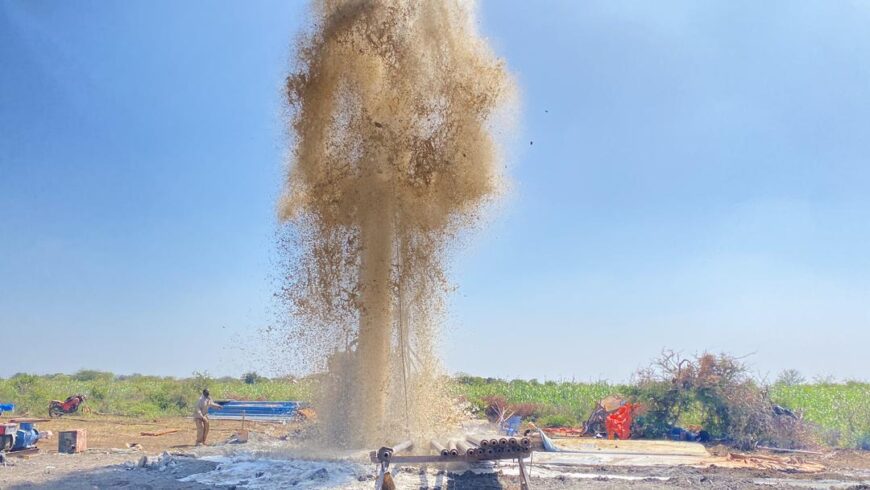
Drilling borehole in Caragaduud Baidoa_March 2024
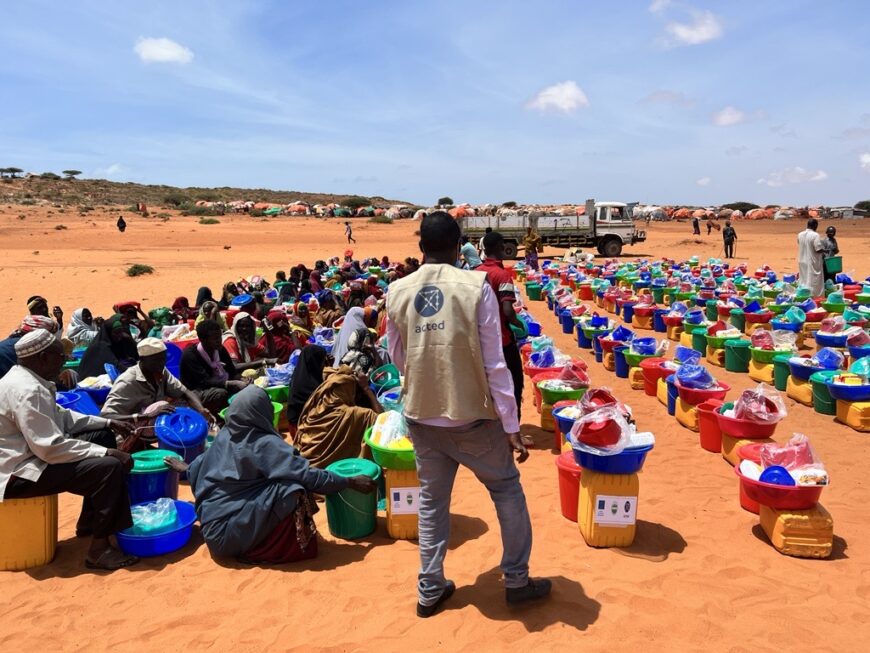
Distribution WASH kits March 2024-New Luglow site Kismayo
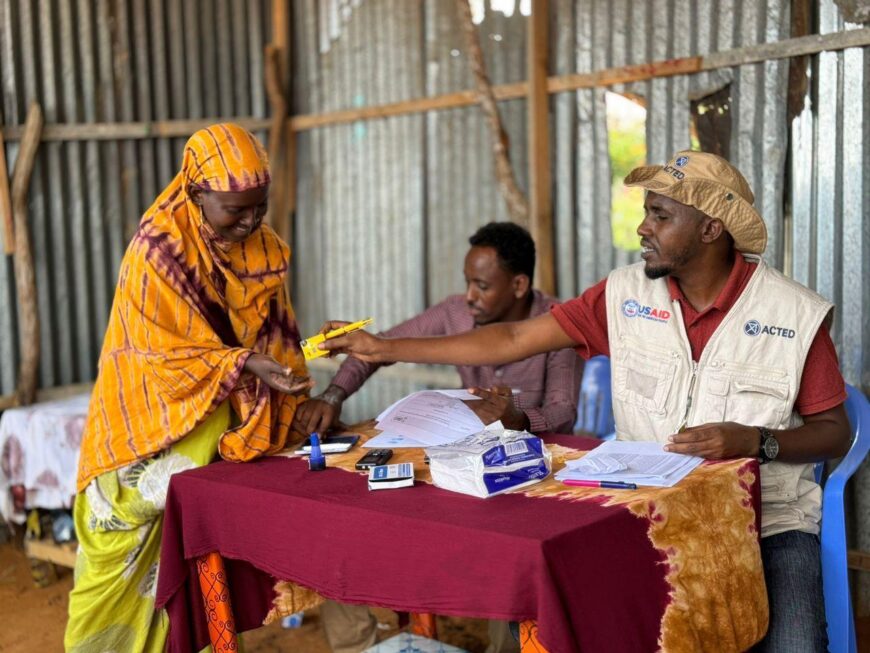
Sim Card distribution December 2023_Kahda idp sites
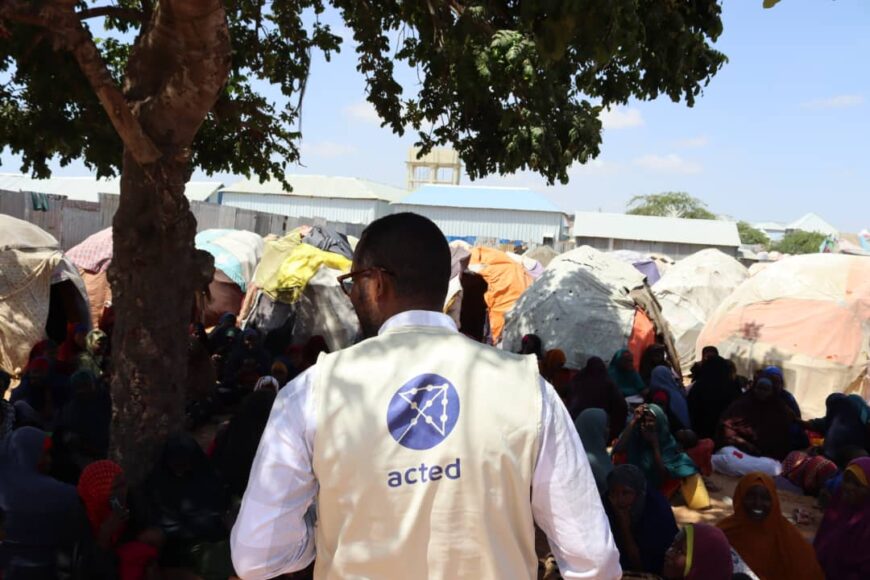
Sim card distribution in Kahda_ February 2024
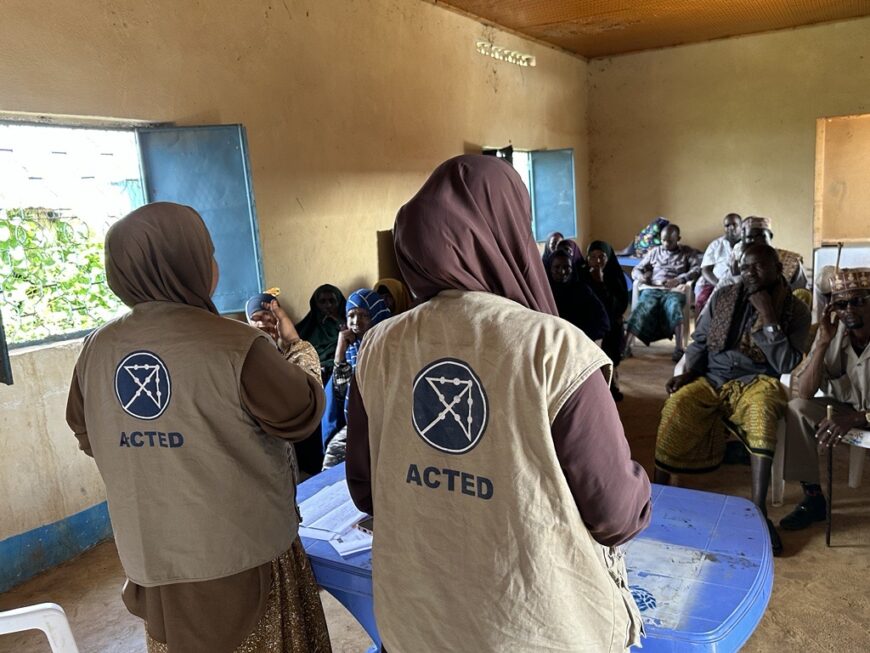
Community sensitisation meetings in Baidoa 2023
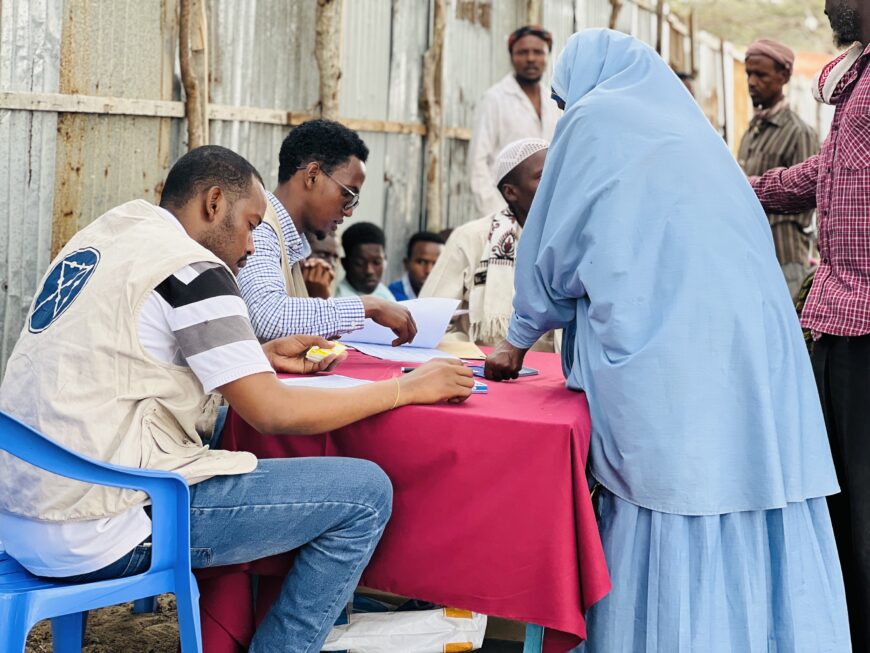
Simcard distribution in Afgoye 2023
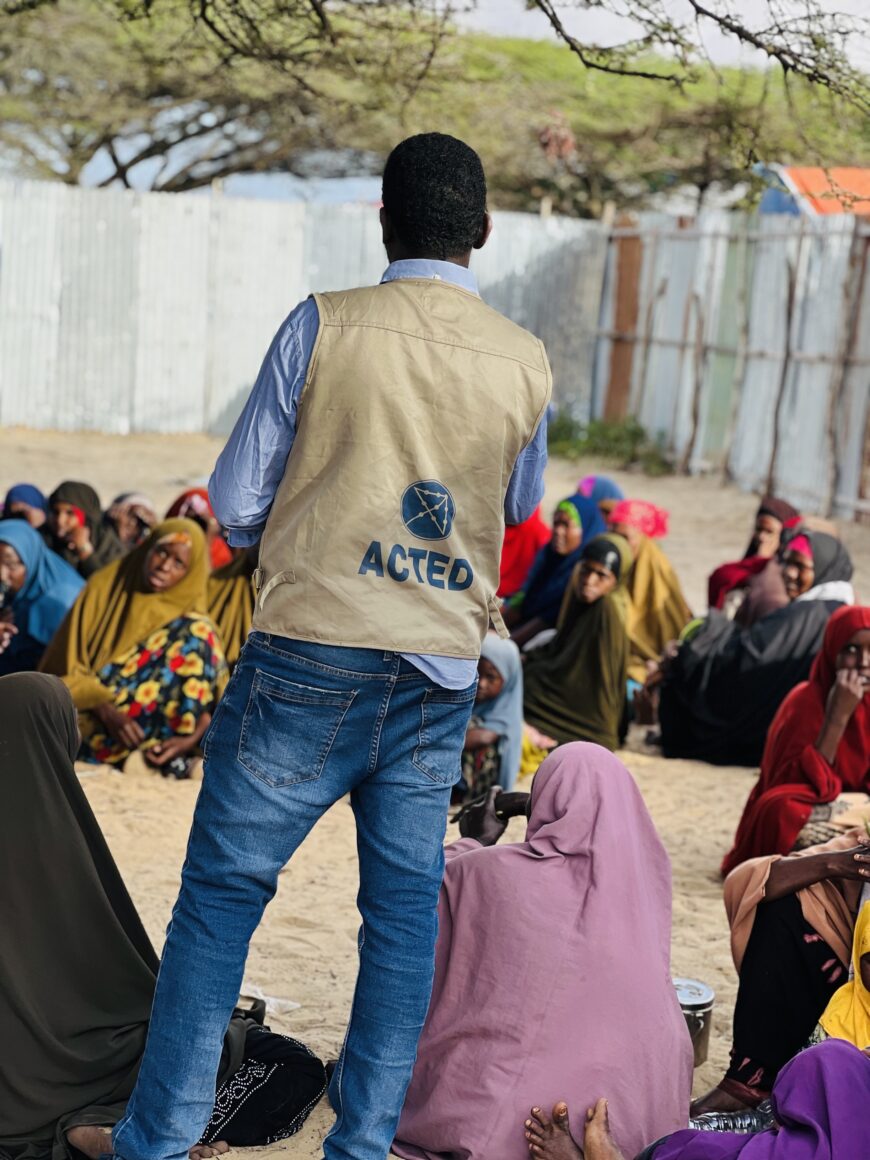
Community engagement 2023
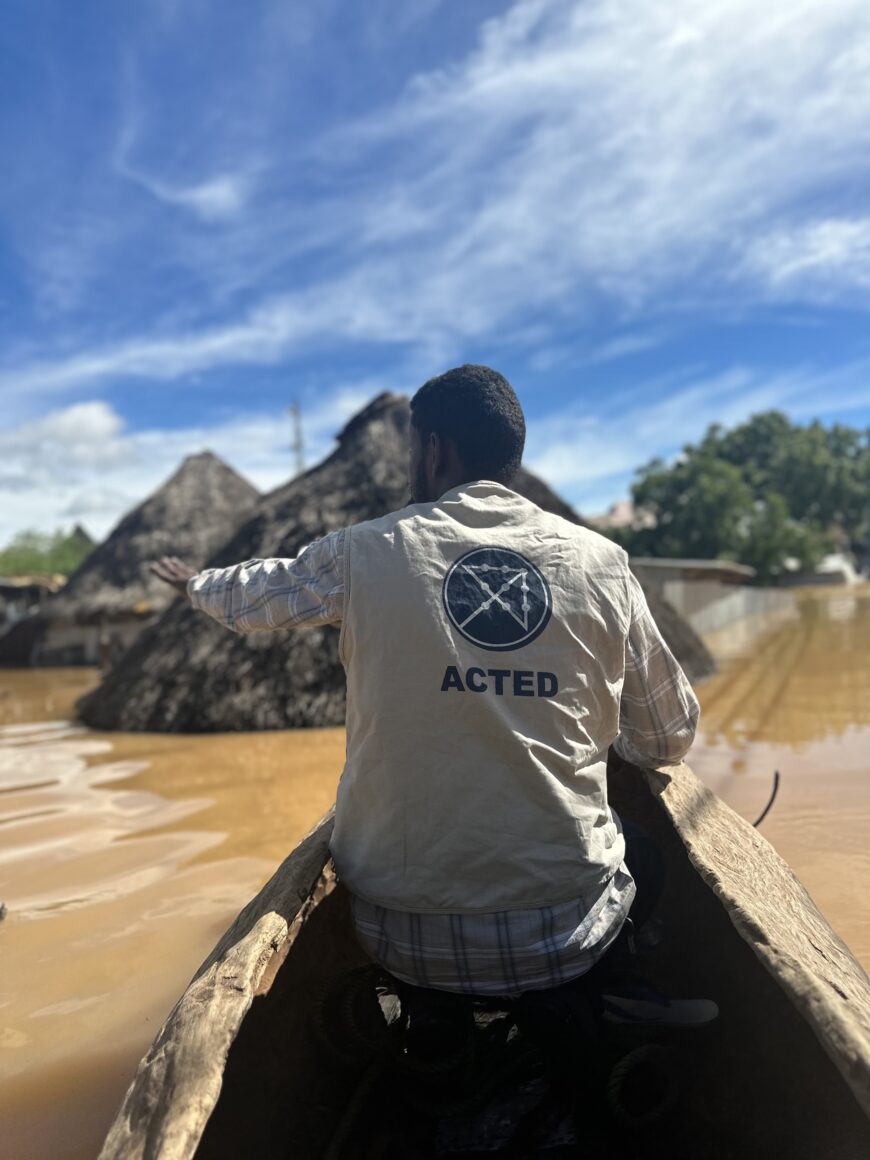
Beneficiary registration in Baardhere 2023
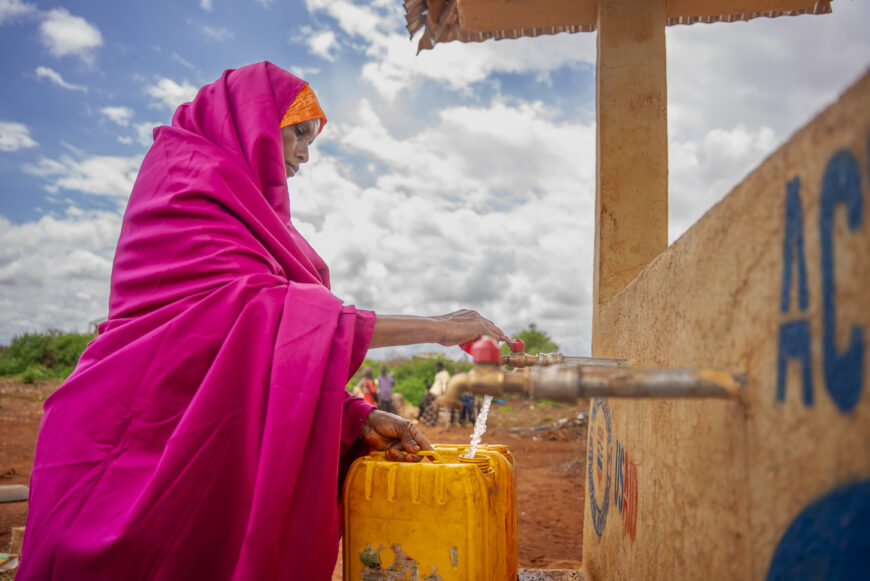
Deeran Ibrahim pouring water to her jerrycan from the water point that was constructed next to their IDP camp
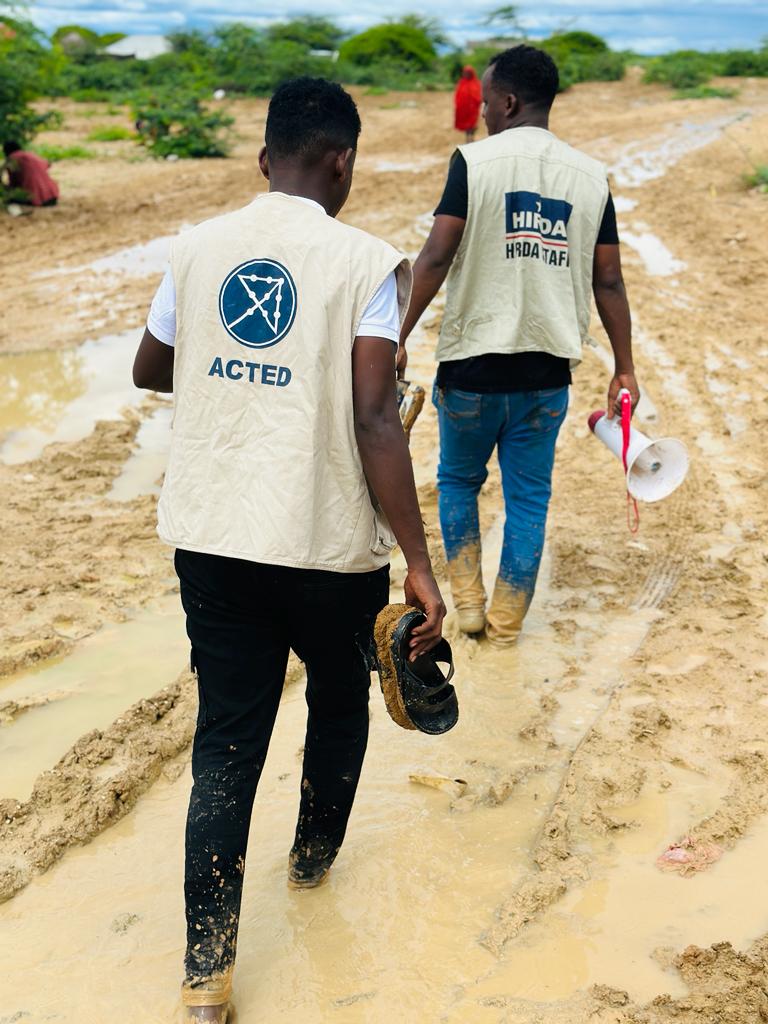
Community engagement_bardhere_ Nov 2023
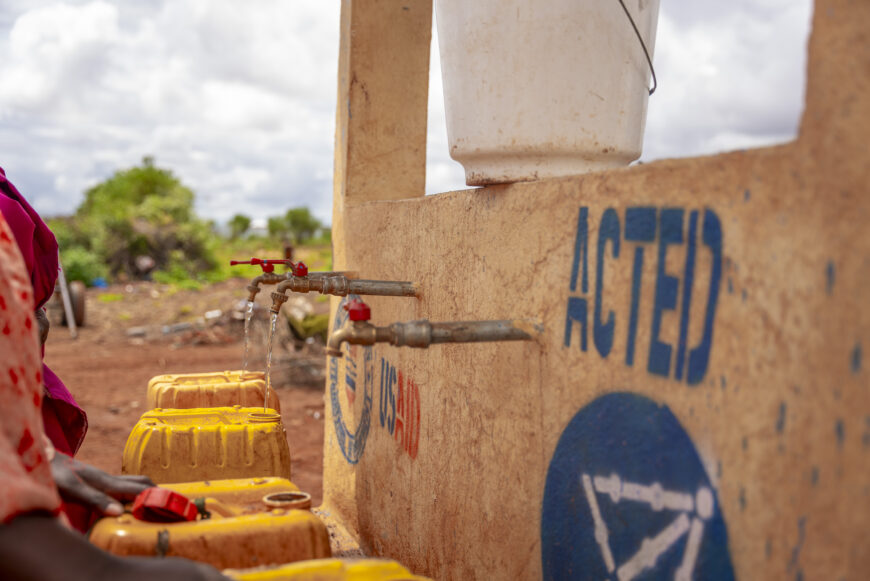
A water points constructed next to the Harubka & Hirow IDP camp in the Alla Amin Neighborhood, so the the community in the IDP will have a running water next to their shelters. ACTED constructed the well, built a large water tank that can hold a significant volume of water, and installed a solar system to help pump the water to the storage tank. ACTED also constructed a fence around the perimeter of the well and prepared a site for a future generator, to be used when there is insufficient sunlight. The construction of the well and water points are part of a project that ACTED has been implementing with funds from BHA/USAID to provide life-saving support to individuals affected by drought, floods, and conflict in Somalia. The project aims to prevent and mitigate the impact of displacement, including in hard-to-reach areas, through a multi-sectoral approach, including Camp Coordination and Camp Management (CCCM), Water, Sanitation & Hygiene (WASH), and Multipurpose-Cash Assistance (MPCA).
El Niño Response - Emergency Flood Alert
Download