In February 2026, while speaking to Acted teams on-site for their group meeting, Kariamakeris Self-Help Group (SHG) members, in Alale, Kenya, reflected on the challenges they had faced over the years.
A Self-Help Group can be defined as a peer-led, culturally accepted mechanism to build financial independence, resilience, and mutual support. Members pool savings to provide micro-loans, share skills and provide mutual social support, providing a vital vehicle for financial inclusion and poverty reduction in many communities.
Despite their efforts, the group members had struggled to make meaningful progress, particularly because they lacked clear rules for managing savings and loans. Thus, when members defaulted on a loan, there were no avenues for recovery or for holding them accountable, and so their money was as good as lost. Recha*, a group member, shared that since Acted started supporting their association in 2025, the situation is turning around. Their group’s progress is stirring interest from other community members, inspiring them to learn from the Kariamakeris Women’s group.
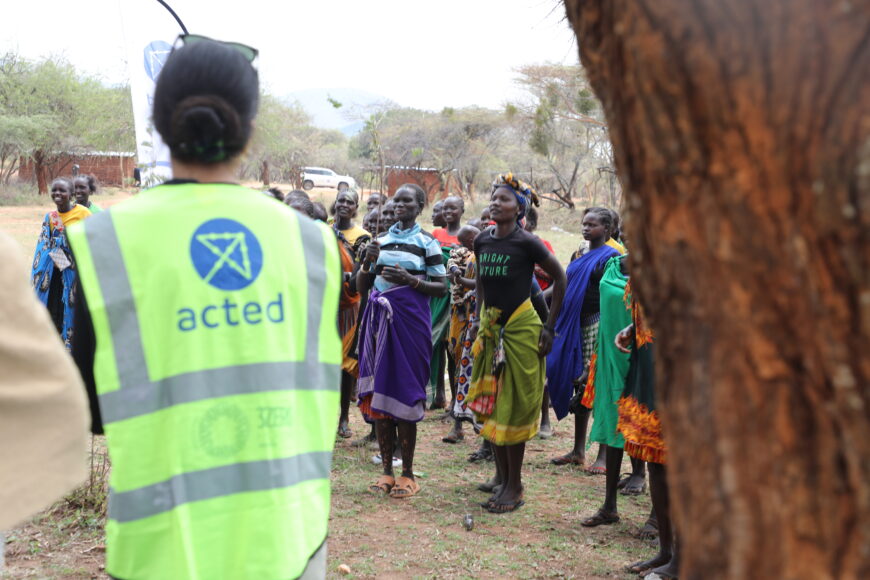
Katich Community members welcoming Acted teams during community engagement visits, February 2026, West Pokot, Kenya
Across many Kenyan communities, and within Africa at large, women hold the primary responsibility for managing essential family needs such as water, food, fuel and healthcare. Despite this responsibility, they frequently have less control and more insecure access to resources; influenced by various interconnected cultural, ecological, economic, political and gendered aspects.
The Kenyan government shows commitment to promote the effective participation of women across all sectors. However, women, especially from historically marginalised counties like Turkana and West Pokot, have a shared reality of retrogressive customs, widespread resource scarcity, gender-based violence, among other issues that have denied them social, economic, educational, and leadership opportunities.
SHE-GROW Initiative across the continent
Aiming to contribute to the creation of opportunities for women in Kenya, and women in similar contexts in Morocco and Cote d’Ivoire, Acted, with the support of The Coca-Cola Foundation (TCCF), launched the SHE-GROW Africa Project.
SHE-GROW (a contraction of “Sustainable Holistic Empowerment: Growing Economic Resilience Opportunities for Women in Rural Africa”) is an 18-month initiative aimed at strengthening the economic resilience of women and their communities in Kenya, Côte d’Ivoire and Morocco. Eighteen communities across the 3 countries, selected for their vulnerability to climate change and limited access to economic opportunities, are targeted. The project is aimed at ensuring 600+ women: have enhanced leadership, financial management and business skills; can develop and launch climate-resilient entrepreneurial initiatives in selected, sustainable value chains; and, are connected with markets and financial support to scale and sustain their enterprises.
In Kenya, the project is implemented within 9 communities in West Pokot and Turkana Counties, building on the progress created with women’s groups supported under an earlier agriculture and livelihoods project, THRIVE. Drylands Learning and Capacity-Building Initiative (DLCI) is Acted’s national partner in this action, bringing on-board its extensive knowledge and experience of dryland communities and gender dynamics of the region.
SHE-GROW project in Kenya
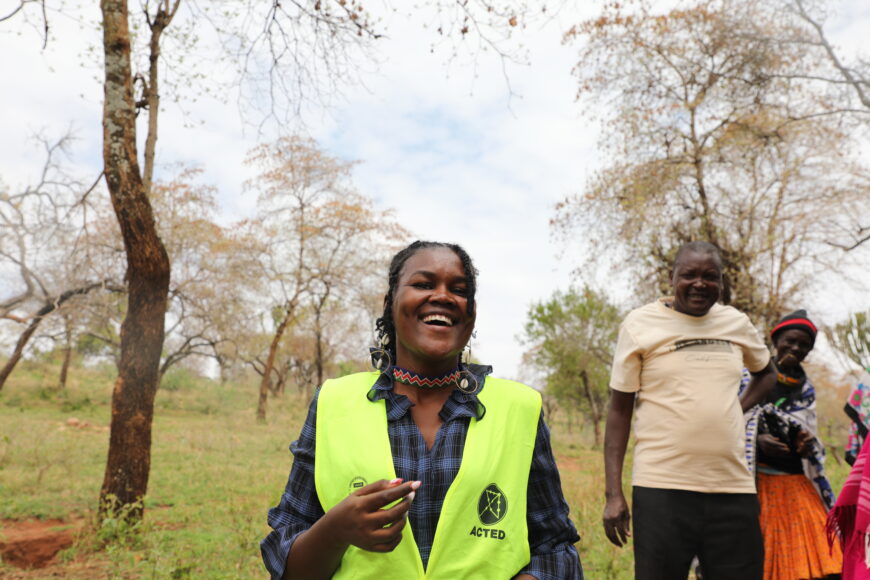
Women mobiliser, Raphaella Lorogoi, photographed on site, after visit to a project participant’s household, February 2026
During community engagement meetings at project inception phase, Cheyech, Secretary at Kariamakeris SHG commented:
I’m very happy to learn of the new women’s empowerment project and knowing that our group is among the groups selected to benefit from it. As we use the savings and loan money to educate our girls, the girls will learn a lot in school to support our community.
Almost halfway through the project, Acted Kenya continues to deliver tailored financial literacy training to women’s Self-Help Groups, each comprising about 30 to –40 members. Recognising that many participants were unable to continue their education beyond the basic level, the sessions combine foundational and intermediate financial management skills and are adapted to the women’s everyday priorities and economic realities.
Alongside these trainings, the SHG members are participating in business development sessions designed to help them identify viable livelihood opportunities and strengthen their capacity to manage collective enterprises. As a result of this process, each group develops a proposal for a group Income Generating Activity (IGA). Members contribute a portion of their savings toward the selected activity, while Acted provides matching support or the materials required, based on the needs outlined in the proposal.
Through this approach, the project aims to strengthen women’s financial decision-making skills, encourage savings and investment practices, and support the development of sustainable income-generating opportunities. To encourage community-wide ownership and create an enabling environment for women’s economic empowerment, young men and male relatives of SHG members participate in complementary livelihood skills training alongside the women’s groups. Training modules for the men include basic marketing strategies tailored to local markets; effective price negotiation techniques; customer engagement and relationship building; and, ethical and inclusive business practices.
In the longer term, these group enterprises have the potential to increase household income, strengthen group cohesion, and contribute to greater economic resilience among participating women and their communities.
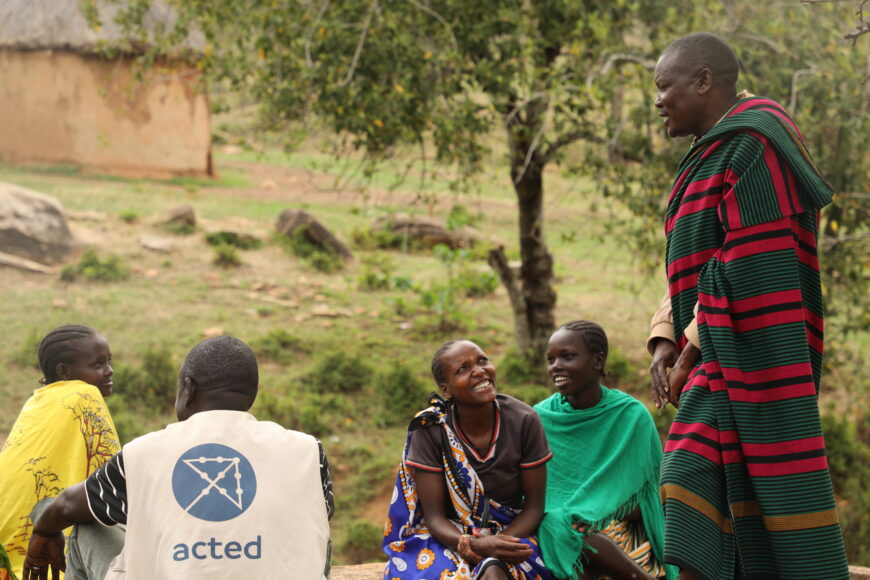
From stronger savings practices to the development of group businesses, women in Turkana and West Pokot are gaining the skills, resources and confidence to improve their economic opportunities through the SHE-GROW Africa project, laying the foundation for more resilient households and communities.
*Names of beneficiaries have been changed to protect their privacy.