Jordan

Present in Jordan since 2008, Acted works to strengthen resilience and inclusive development in one of the world's most water-scarce countries. With over 90 projects completed and more than €178M invested, Acted supports Jordanians and refugees through livelihoods and economic development; inclusive community engagement and cohesion; and collaborative environmental sustainability. From Za’atari and Azraq camps to rural farms and urban hubs, Acted partners with communities and institutions to advance its 3ZERO vision, Zero Exclusion, Zero Carbon, Zero Poverty, ensuring that programming builds long-term sustainability and social cohesion.

Jordan faces overlapping crises: hosting 1.3 million refugees amid slow economic growth, high unemployment, and rising poverty. Ranked among the most water-scarce nations, with only ~90 m³ of renewable water
per person annually, climate change accelerates droughts and land degradation. Food insecurity affects refugees and host communities, straining services and infrastructure. Integrated approaches to livelihoods, resource efficiency, and climate resilience are essential for stability and inclusive development.

Acted in Jordan

5+ M
People supported
67
Staff
90+
Projects
€178 million
Budget

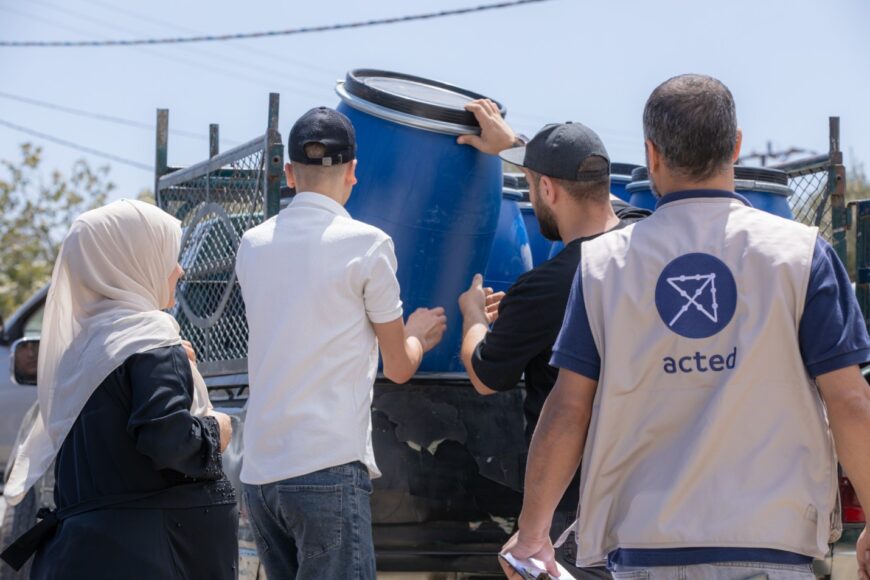
Acted is committed to addressing these issues through a blend of humanitarian aid and development programs that emphasize livelihoods, localization, WASH, governance, and social inclusion. Acted’s work involves close collaboration with local communities, government bodies, civil society, and inter-agency groups to meet immediate needs while fostering long-term, sustainable development in livelihoods, infrastructure, environmental protection, institutional capacity and social cohesion. Acted also promotes circular economy models to create positive social, environmental and economic impact throughout its programmatic strategies in Jordan. To this end, Acted aims to accelerate waste reduction, reuse and regeneration of natural systems, while also creating inclusive and low-carbon economic opportunities.

689
MSMEs supported through business development grants
38,837
of disaster/crisis-affected individuals’ basic needs supported
1,357,993 EUR
transferred
16,000
individuals gained access to basic services
33,489
individuals obtained quantity and quality of emergency food rations
1,268
individuals engaged in campaigns for sustainable development

3ZERO in Jordan

Acted aligns with the global 3ZERO Strategy (2020-2025), focusing on Zero Carbon, Zero Poverty, and Zero Exclusion. In Jordan, this commitment is reflected in all programs through the promotion of inclusive and low-carbon solutions to address environmental and poverty challenges.

For example, in central and northern Jordan, this commitment is reflected through Acted’s project aimed at supporting economic growth and sustainable diversified income creation in Jordan.

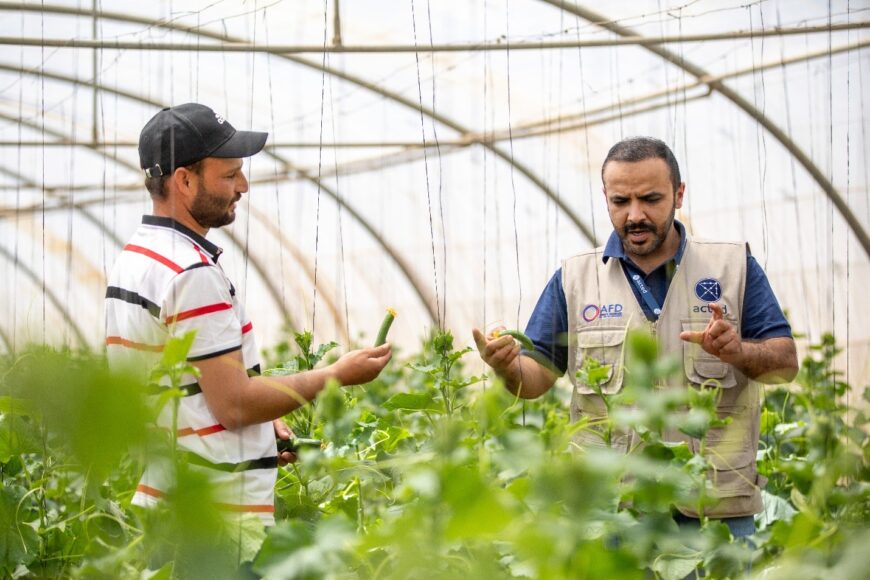
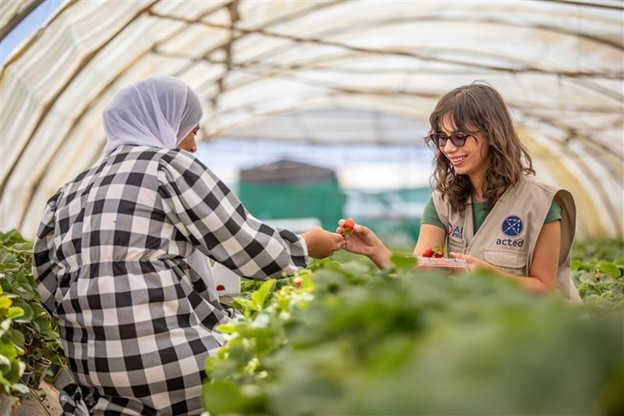
Firstly, to achieve Zero Poverty, the project supported vulnerable farming households in accessing year-round income and reducing expenditures through perma-gardening and income-diversification activities. This support significantly improved economic stability, with 72% of beneficiaries reporting enhanced financial resilience and 343 individuals rising above the national poverty line.

Secondly, in pursuit of Zero Exclusion, the project focused on strengthening the technical production skills of Syrian and Jordanian daily agricultural workers. Advanced training in sustainable agricultural practices, decent work conditions, and business development was provided, promoting inclusivity and improving access to better employment opportunities.

Finally, in line with Zero Carbon goals, the project contributed to environmental sustainability by endorsing climate-smart agricultural practices and supporting permagarden implementation.

Notably, 98% of beneficiaries engaged in perma-gardening saw increased agricultural production, and 99% of those involved in income-diversification activities launched their own businesses.
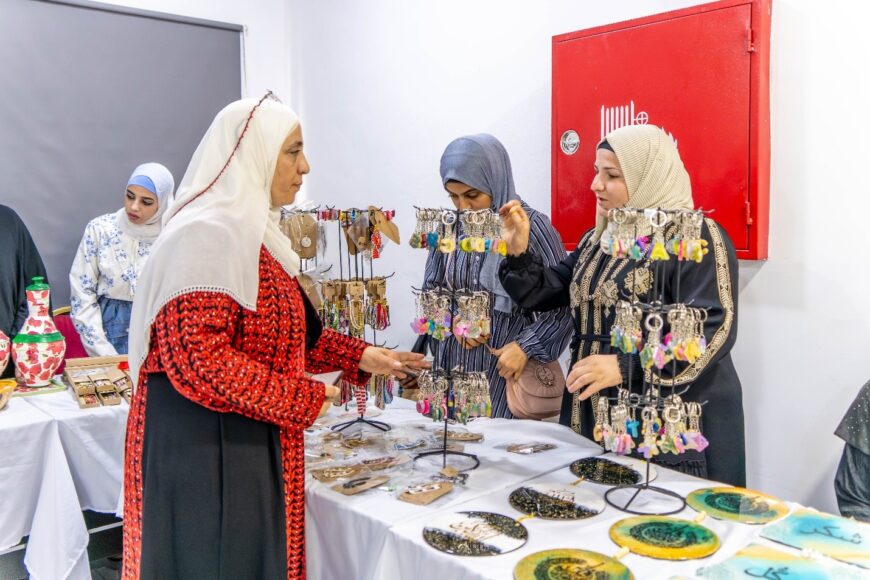
Beneficiaries received training in artisanal crafting, specializing in the development of upcycled products through fabric tailoring and sewing.
Acted’s project to enhance the social impact of enterprises and entrepreneurs by improving their product and service delivery
Induction training day for cash for workers, Beit Eidis, March 2023
Construction of the drainage system by Za’atari refugee camp residents 2
Construction of the drainage system by Za’atari refugee camp residents
Beneficiaries received training in food processing, focused on food conservation, food safety standards, homogenization, how to avoid common microbial contamination, packaging, labeling, and marketing

Localization and Strategic Partnerships

Acted is advancing its localization efforts through strategic partnerships and capacity-building programs that are pivotal in fostering sustainable development. Our approach focuses on collaboration and mutual growth, leveraging both local and international resources to achieve impactful outcomes.

THRIVE: Grounded in the interdependence of ecosystems, livelihoods, and rural markets, THRIVE promotes a symbiotic relationship between these elements, ensuring they function collaboratively rather than in competition. By addressing the challenges of degradation and desertification, Acted champions nature-based solutions, livelihood diversification, and social cohesion. Acted Jordan’s 2023 project aimed at supporting economic growth and sustainable diversified income creation in Jordan was based on this approach.

GOCA Tool: As part of the EU-funded Jordan Guardians Project (2022), Acted employs the Global Grassroots Organizational Capacity Assessment (GOCA) tool to bolster the capacity of national and grassroots civil society organizations. This initiative focuses on governance, financial management, and advocacy, aiming to improve operational and institutional effectiveness. Through this mutual capacity-building approach, we strengthen the role of civil society in policy dialogue and sustainable development, reinforcing our collaborative efforts for a more impactful and localized approach to development.

Circular Economy Assessments: In 2021, Acted conducted a comprehensive circular economy assessment to explore market potentials and investment opportunities for circular approaches. This assessment, funded by the EU Madad Fund and BMZ, analyzed various value chains and municipal waste management, providing recommendations to shift from linear to circular economic models. A second assessment, funded by UNEP and in partnership with IMPACT Initiatives, focuses on integrating circular economy models into the humanitarian sector, developing a toolkit for stakeholders to adapt their programs accordingly.

Empower Jordan - 2025
Download
Country Strategy 2023
Download
Consultations and Needs assessment for women in Zaatari and Azraq camps
Download
Circular Economy in the Humanitarian Sector in Jordan
Download
Circular Economy National Study Executive Summary
Download

Current projects

Protection of water dams in Jordan through labor-intensive activities schemes
Enabling and Mobilizing Civil Society Organisations in Jordan through Reinforced Institutional Advocacy and Technical Capacities to Enhance Coordination for Sustainable Development
Sanitation Solutions for Underserved Communities In Jordan
GrowEconomy: Promote sustainable, inclusive and decent economic opportunities for Syrian refugees and vulnerable Jordanians in the agriculture sector
Privacy

This website uses cookies so that we can provide you with the best user experience possible. Cookie information is stored in your browser and performs functions such as recognising you when you return to our website and helping our team to understand which sections of the website you find most interesting and useful, so we can improve your browsing experience and the information made available.

You can adjust all of your cookie settings by navigating the tabs on the left hand side.

According to the French law N• 78-17 of 6 January 1978 on computing, data and liberties (CNIL), all users who has deposited nominal information either directly or indirectly, may ask for the submission of this nominal information through a request to Acted Data Protection Officer either by email or in written to Acted DPO, 33, rue Godot de Mauroy, 75009 Paris, France – and have them edited or suppressed.

Terms and conditions of the Acted website are available here.

Manage Your Cookies

Enabling the Strictly Necessary Cookie allows us to save your preferences for cookie settings and ease your browsing experience with us.

Google Analytics

This website uses Google Analytics to collect anonymous information such as the number of visitors to the site, and the most popular pages.

Keeping this cookie enabled helps us to improve our website.