In Chad, the Lake Province remains one of the areas hardest hit by conflict, profoundly disrupting the lives of hundreds of thousands of people. Access to education is a major challenge there due to forced displacement and persistent insecurity, which limit access to educational infrastructure and interrupt children’s schooling. Since 2021, Acted has been committed to ensuring stable schooling for displaced children by supporting schools in the Fouli department. Through its work, Acted combines support for education with economic empowerment, with the aim of ensuring the sustainability of school infrastructure and strengthening community involvement in educational management.
A close partnership with communities for autonomous school governance
Through its support for schools in Fouli, a key priority for Acted is to support Parents’ Associations (APE) and Mothers’ Associations (AME), which play a vital role in improving learning conditions. Alongside the School Management Committees (COGES), present in every school and comprising the headteacher, teachers and elected community members to ensure effective school management, the APEs and AMEs are crucial for representing the interests of the 2,354 enrolled pupils and promoting the quality of education. To strengthen their effectiveness and autonomy, these associations benefited from several participatory workshops, covering topics such as school administration, school planning, and communication between parents, teachers and the school management. These workshops helped to develop the organisational skills of the APEs and AMEs, whilst also raising their awareness of the importance of their role in the continuous improvement of the quality of education within their community.
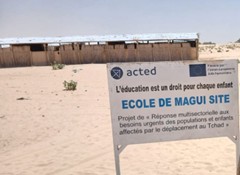
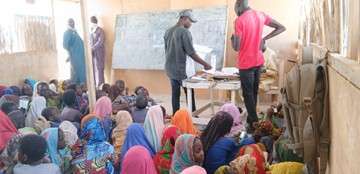
Alongside these training courses, Acted supports the development of income-generating activities (IGAs) among members of the Parents’ and Teachers’ Associations (PTAs) and School Management Committees (SMCs) at seven schools, with a view to strengthening their financial capacity and their ability to contribute towards the schools’ running costs. These activities, such as running small businesses, agricultural production and setting up craft enterprises, have been designed to enable communities to generate financial resources using their own capabilities. 90 members of the PTA and School Management Committees have been trained in the management of these economic initiatives, learning to manage the funds raised, plan investments and reinvest profits in funding education, particularly for teachers’ salaries and school operations. These AGRs have enabled the APEs and AMEs to become key players in ensuring the sustainability of schools, by providing them with a means of independently funding educational needs.
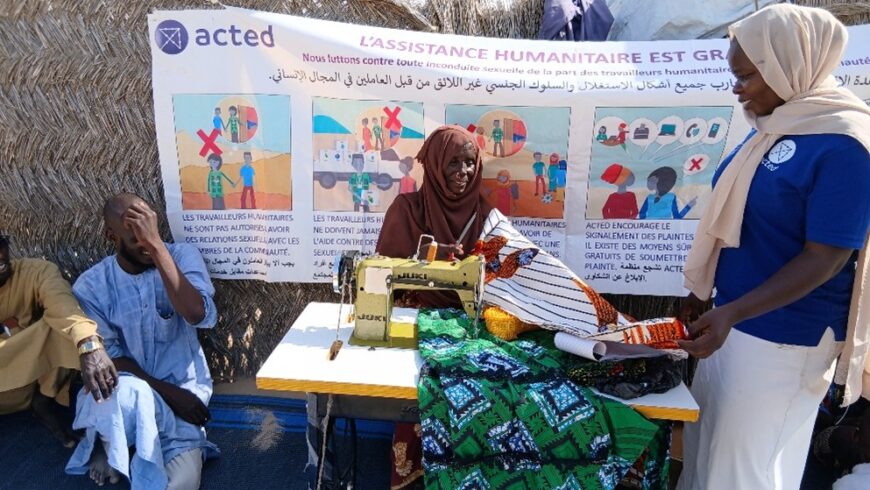
Zeneba, a parent, speaks of the direct impact of this approach. Before receiving support from Acted, Zeneba struggled to provide for her family:
Before Acted, I sold doughnuts and sewed clothes in my workshop. But working conditions were difficult. However, with Acted’s support in funding the sewing (two machines provided) for our mixed group, I am now able to contribute to the school’s financial independence.
Acted has provided Zeneba and other members of the PTA/AME with material resources (such as sewing machines) to help them develop stable income-generating activities. A portion of the profits generated is then paid directly into the school’s accounts, thereby contributing to the schools’ funding. These funds are used in particular for the maintenance of classrooms, school canteens, and other infrastructure essential to school life. Furthermore, the APE/AME groups have been supported in setting up Village Savings and Credit Associations (AVEC) to create a system for the joint management of the income generated and to encourage investments that enable the further development of income-generating activities.
Training of community trainee teachers: a pilot initiative to strengthen the resilience of the education system
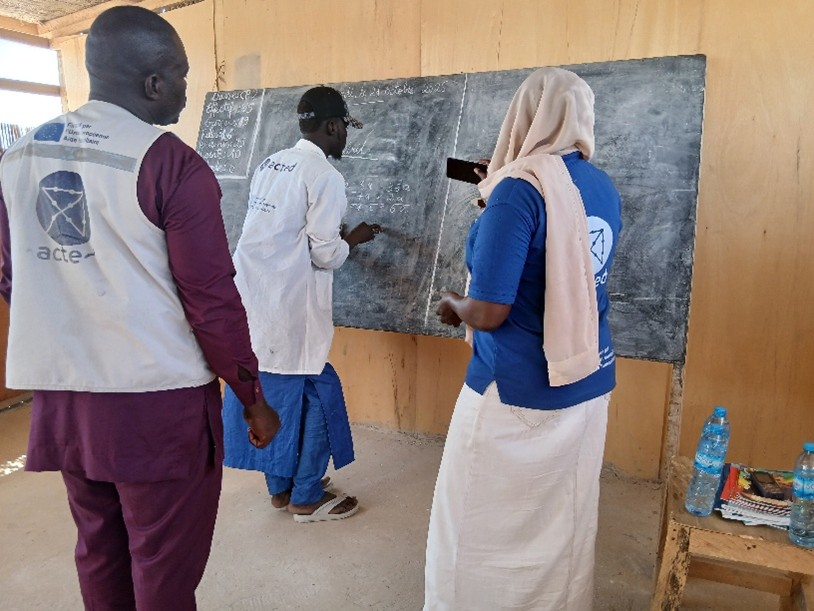
The community-building work led by Acted to ensure stable schooling for children in the Lake region has also resulted in a training initiative to enable young people who have passed their primary school exams and come from beneficiary communities or neighbouring areas to train with qualified teachers as community trainee teachers. This initiative addresses the shortage of available human resources in relation to local educational needs, with the aim of ensuring the continuity of teaching and offering employment opportunities to young people from local and displaced communities. During the 2024/25 and 2025/26 academic years, nine community trainee teachers were placed with qualified teachers in CP1 and CP2 classes.
Bana*, a former pupil at one of the schools supported by Acted in Fouli, speaks of the impact of this initiative:
My name is Bana, and I am a direct beneficiary of the Education component of the project at the Kiskawa site. In fact, I myself am a product of the NGO Acted’s Education project. In previous years, my parents and I did not realise the importance of school. Acted set up a school in our displacement site. That was when I enrolled in the non-formal education programme. I continued my studies at this school until 2024, when I was selected as a trainee for the 2024–2025 academic year.
Community empowerment is a key driver in ensuring a stable future for children. The experiences of Zeneba and Bana illustrate the tangible impact of targeted support in ensuring sustainable access to education: by strengthening local capacities and investing simultaneously in both education and family livelihoods, ACTED empowers displaced communities to address the challenges posed by insecurity.
*The names of the beneficiaries have been changed or replaced to protect their anonymity and ensure the confidentiality of their personal information.