In Yemen, humanitarian conditions are expected to further deteriorate in 2026, with projections indicating that 22.3 million individuals will require humanitarian assistance—an increase from the 19.5 million reported in the previous year. Since 2015, Al Dhale’e, a frontline governorate, has been facing repeated displacement into remote and insecure areas, which has caused further access constraints, delayed assistance, and limited access to services and information.
Inadequate Access to Services and Support
Hind*, a 48-year-old mother of seven and a former teacher, fled her home in Hudaydah in 2020 due to the war and now lives in Eastern Sahda Camp in Al Dhale’e. Like many others, her family faced daily challenges, including finding food, securing shelter, and searching for assistance.
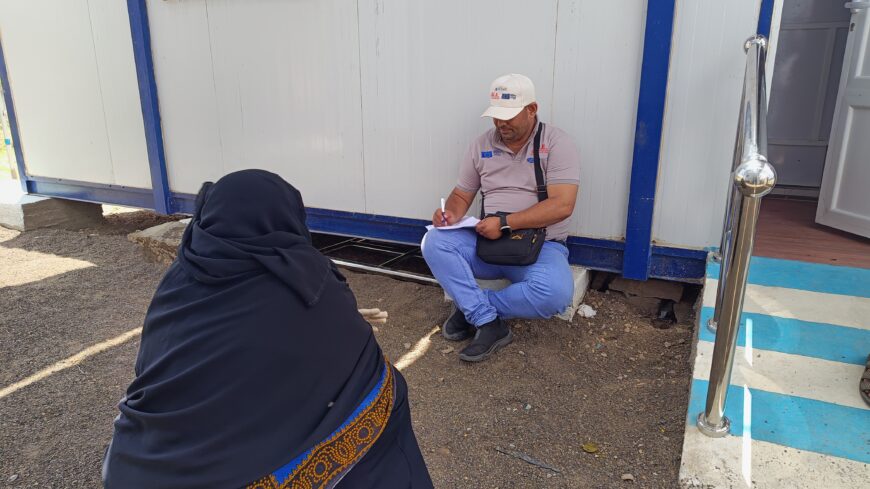
Hind describing lack of access to information before the establishment of the CRC, Al Dhalee district, Al Dhale'e governorate, April 2026
The main challenge was the distance. We had to travel far to reach assistance, and that was difficult for families like ours.
Marwan*, a 38-year-old farmer and father of five, was also displaced because of the war in 2020. He now lives in Al-Hussein District, Al Dhale’e Governorate. He says it was difficult for displaced families to find reliable information on available assistance and reach the right organisations.
We struggled to get information about the assistance available. We also faced problems when trying to submit complaints or reach the related organisations.
Acted’s Community Resource Center (CRC)
Acted established the CRC in Al Dhale’e in July 2025 to ensure displaced families and host communities can access timely support in one place. Through the centre, Hind and Marwan found a safe and supportive space where they could express their needs, receive guidance, access information, share feedback and complaints, and be connected to available services.
The CRC forms part of the Area-Based Site Management (ABSM) approach, implemented by Acted with funding from the European Union through the Yemen Displacement Response (YDR) Consortium, enabling displacement-affected communities to access information, services, and support through a centralised and community-focused platform.
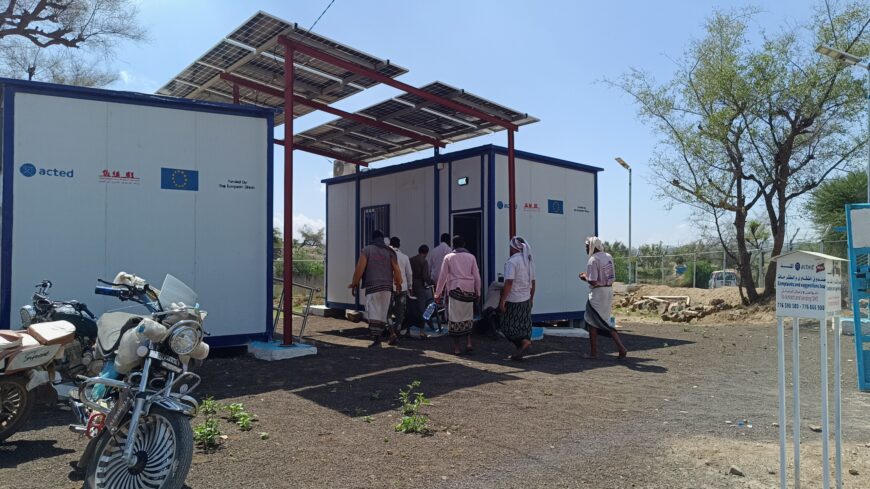
Community Resource Center (CRC) in Al Ajab Village, Al Dhalee district, Al Dhale’e governorate, April 2026
Hind says her first visit to the centre gave her a better understanding of the support available.
I went to the centre because I needed help as a displaced person. When I arrived, I was warmly welcomed, and the staff listened carefully to my needs.
Marwan had a similar experience.He says, “To be frank, the feelings I had were indescribable. During that time, I was living in a state of complete stress.” When he arrived, the staff received him well. “They welcomed me and listened attentively,” he says. “They asked about my situation and explained what could be done.”
EU-Funded Support That Made a Difference
After assessing their needs and referring them to appropriate services, the CRC helped Hind and Marwan access humanitarian assistance that improved their living conditions. “The centre helped connect us with immediate support.” says Hind.
I received humanitarian emergency assistance, including the provision of shelter, hygiene kits, and cash assistance.
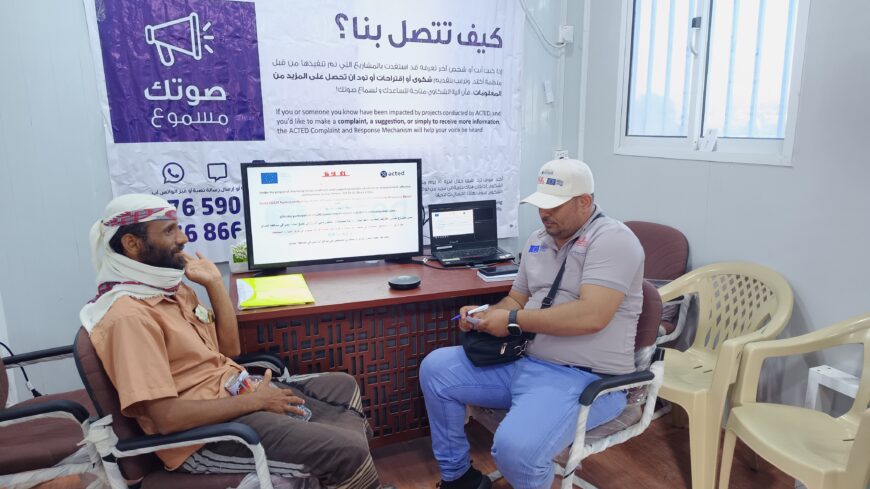
Marwan (on the left) giving feedback at the CRC in Al Ajab Village, Al Dhalee district, Al Dhale’e governorate, April 2026
“Thank you for all the joy you have brought into our lives, and even more; indeed, the one who guides others towards good is rewarded just as much as the doer is,” Hind concludes.
Marwan shares the same appreciation. “When I received the news of the support, the heavy burden of worry and stress was lifted off my shoulders.”
Acted empowers people like Hind and Marwan by helping them identify where to turn and what steps to take to access available support. In many cases, the CRC acts as a hub that provides awareness sessions and referrals to other organisations that could provide direct support.
CRC Impact At-A-Glance
- Acted received assistance requests from 1,913 individuals (937 male, 976 female) through the CRCs.
- Acted managed 974 complaints (635 male, 339 female), ensuring transparent and responsive feedback.
- Acted held coordination meetings and provided various training and awareness sessions (Code of Conduct, CRC services, Community Mobiliser training, and more) to 927 individuals (703 male, 224 female).
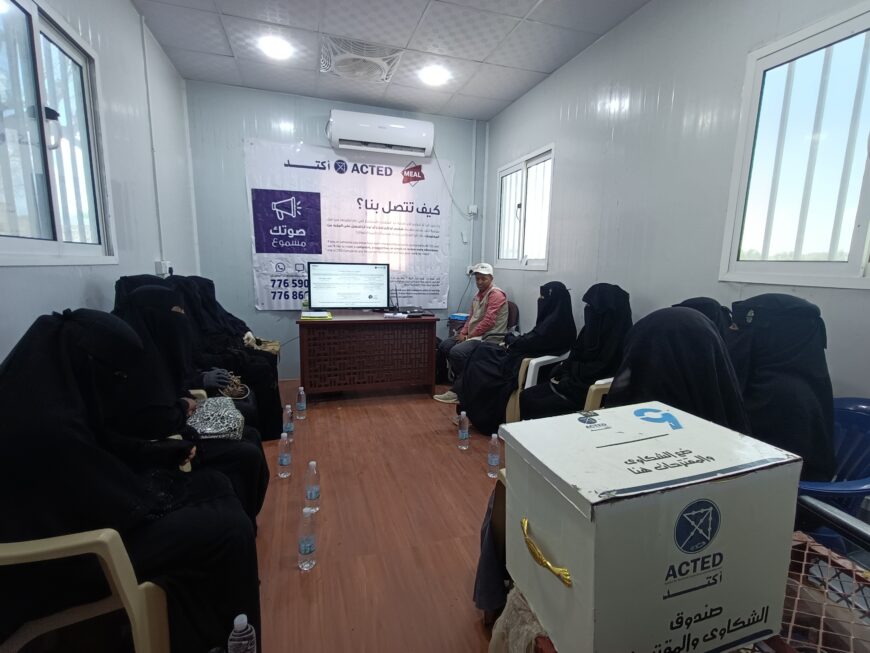
Code of Conduct awareness workshop at the CRC in AlAjab Village, Al Dhalee district, Al Dhale’e governorate, April 2026
As part of the project “Improving living conditions and supporting durable solutions for displacement-affected communities across Yemen” launched in 2023, funded by the European Union through its Humanitarian Aid Operations and delivered in partnership with the YDR Consortium, Acted CRCs across Al Dhale’e, Aden and Marib have assisted 3,815 individuals (2,940 internally displaced persons and 875 host community members). This has enabled displaced families to access clear information, referrals, and guidance.
*Names of beneficiaries have been changed to protect their privacy.