Kenya: at the Heart of the Regional Refugee Response
As of late 2025, Kenya hosts over 860,000 refugees, a decade-high figure that underscores the country’s pivotal role in regional stability. With the majority of displaced populations settled in the Dadaab and Kakuma complexes, as well as urban centres like Nairobi and Eldoret, the demand for sustainable, long-term solutions has never been more pressing.
While Acted Kenya continues to provide essential services, such as unconditional cash support, we recognise that the most effective responses are those rooted in local knowledge. Our strategy focuses on localisation in practice: shifting from a model of aid delivery to one of shared humanitarian governance.
The Kenya Cash Consortium: A Platform for Shared Expertise
Since 2019, Acted has facilitated the Kenya Cash Consortium (KCC). This partnership brings together over 30 organisations rooted in Kenya’s Arid and Semi-Arid Lands (ASALs), including the ASAL Humanitarian Network, IMPACT Initiatives, Oxfam, and Concern Worldwide.
Supported by DG ECHO, the KCC operates on the principle of technical subsidiarity. By integrating local insights on market functionality and community dynamics with international standards for disaster preparedness, the consortium ensures that cash assistance is both rapid and contextually precise. This collaborative structure allows Kenyan organisations to lead on implementation while collectively strengthening the region’s overall response capacity.
GOCA: Enhancing Institutional Resilience
Acted recognises localisation not only as a principled commitment to ensure local actors are at the core of aid actions but also as a strategic necessity. To support the long-term autonomy of our partners, Acted is applying an approach called GOCA.
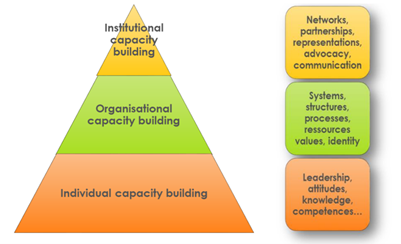
GOCA stands for Grassroots Organisation Capacity Assessment, and it is Acted’s signature program for strengthening the institutional and organisational capacity of civil society organisations. GOCA is designed as a peer-to-peer framework to align local institutional systems with the requirements of the global donor landscape. The objective is to ensure that Kenyan civil society organisations possess the robust architecture necessary to manage the large-scale interventions independently. The process focuses on four strategic domains:
- Governance & Oversight: Refining internal management structures and accountability frameworks
- Financial Management: Strengthening systems for transparent and efficient fund administration
- Project cycle management: Standardising tools for the design, coordination, and evaluation of complex projects
Resource mobilisation: Developing strategies to secure diverse and sustainable funding streams
Driving Results through Technical Cooperation
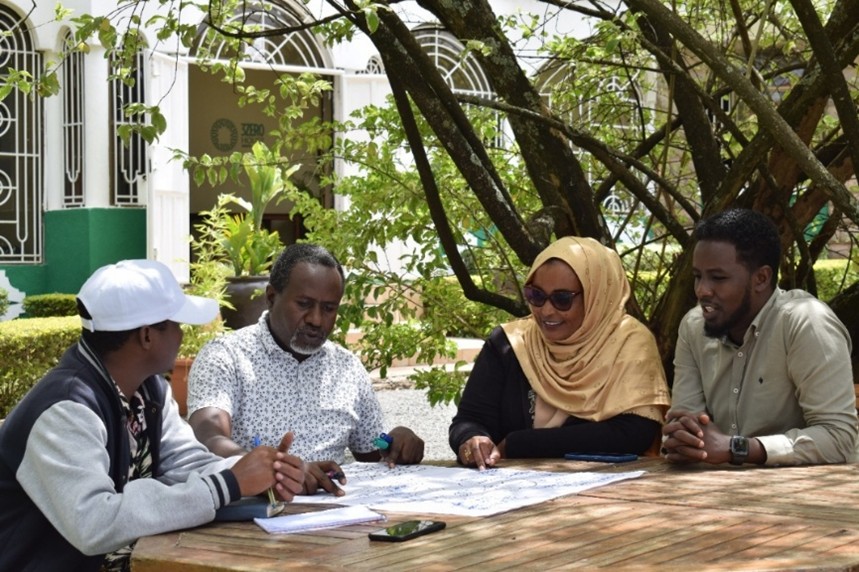
Under the EU funded KCC Project, Acted and seven key partners have recently completed a series of GOCA engagements. These sessions are not generic trainings; they are joint reviews where tools are adapted in real-time to the partner’s specific operational reality.
By focusing on high-level compliance, reporting and branding, the GOCA approach prepares local actors toe engage directly with global donors. This reduces systemic bottlenecks and ensures that resources remain as close to the point of impact as possibles.
The PCM (Project Cycle Management) tools provided a structured framework to better navigate the challenges we face on the ground. It allowed us to refine our existing internal processes to meet international standards without losing our community focus
Through these partnerships, Acted and its Kenyan colleagues are moving toward a more balanced humanitarian ecosystem where leadership is defined by proximity to the community.
Sidenote: the Evolution of GOCA
As of 2026, GOCA has evolved into CATALYST, which is a more adapted tool with broader methodology, and capitalises in 15 years of global experience supporting civil society worldwide, to better serve organisations at any stage of development.
*(Names have been changed for individual privacy)