Across Jordan, many small farmers and home based producers struggle to access stable markets, improve production, and translate their skills into sustainable income. Limited market linkages, technical support, and financial resources often prevent them from fully benefiting from their skills and agricultural potential. This reality underscores the need to mobilize coordinated efforts that strengthen value chains and create real economic opportunities at the local level.
In response to these challenges, the Grow Economy consortium programme (2023-2026) was established led by Acted and implemented in partnership with Action Against Hunger (ACF), Phenix Center for Substitutable Development, Terre des Hommes (TdH), Royal Society of Conservation of Nature (RSCN), Eco Consult and National Agricultural Research Center (NARC), with funding from AFD. The programme aims to strengthen agricultural value chains across Jordan. It does so by providing targeted training, financial support, and opportunities to reach new customers through events like the National Olive Oil Festival. Among its participants are Hassan*, a Syrian farmer strengthening his strawberry business, and Howaida*, a Jordanian mother transforming her home garden into a source of income. Their stories show how access to knowledge and markets can reshape lives and expand economic possibilities.
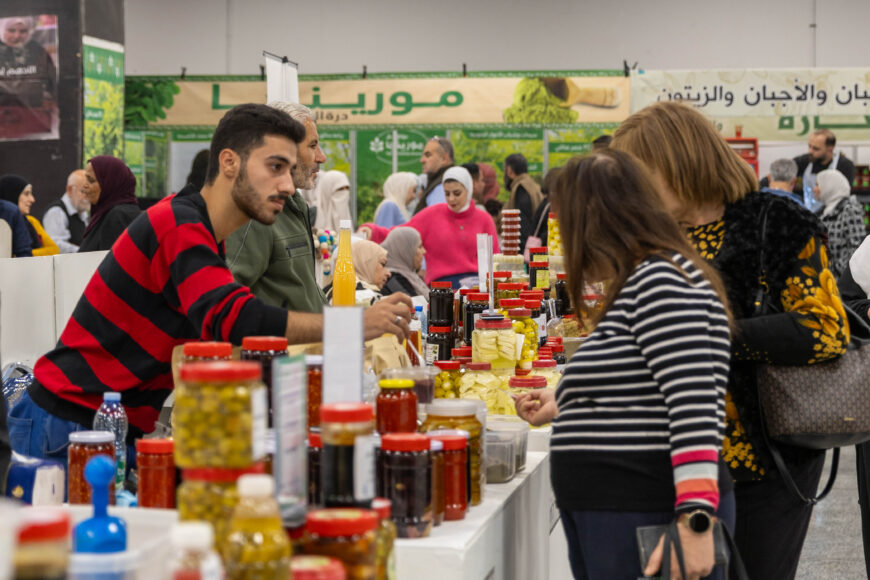
In Jordan, small-scale producers often face limited market access, fluctuating demand, and a lack of training in marketing and entrepreneurship. These challenges prevent farmers and home-based entrepreneurs from turning their skills into reliable income.
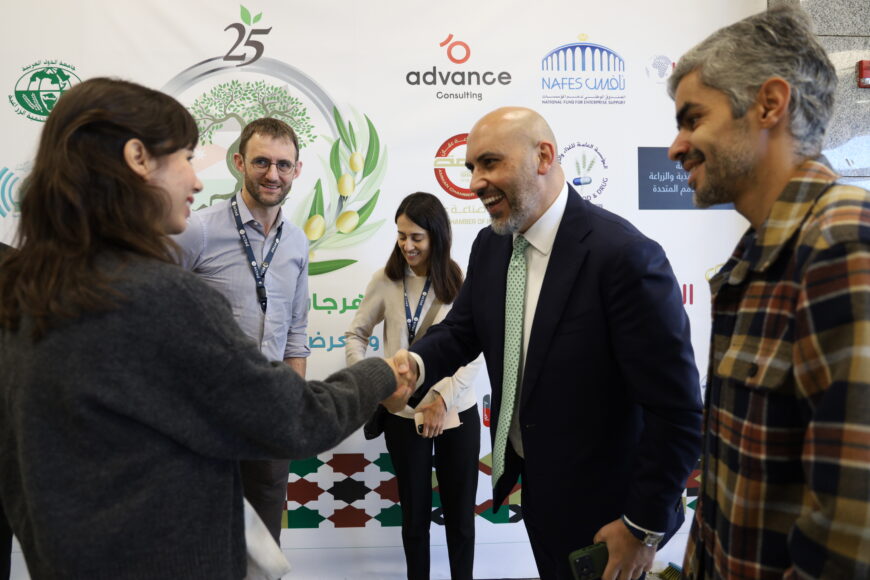
Through the Grow Economy project, Acted has been equipping participants with agricultural training, business development skills, and grants to expand or launch their initiatives. With approximately 600 small farmers and 710 labourers beneficiaries across four governorates; Ajloun, Irbid, Balqa and Madaba , the programme’s achievements include increased productivity, improved confidence, and stronger market linkages. These impacts were showcased most clearly during participants’ involvement in the 25th National Olive Festival in Amman, Jordan, organised by the National Agricultural Research Center (NARC) in collaboration with Acted and consortium members, where beneficiaries presented a range of products including fresh strawberries, fruit jams, herbal goods, and various artisanal items, to hundreds of visitors. The festival took place from 27 November to 6 December 2025.
New Knowledge, New Possibilities
Both Hassan and Howaida joined the Grow Economy programme with strong determination, seeking greater opportunities to advance their livelihoods. Hassan, a 29‑year‑old Syrian farmer in Madaba, hoped to improve the productivity of his small strawberry farm and learn how to market his produce more effectively. Meanwhile, a 50‑year‑old Jordanian mother Howaida sought to turn her flourishing home garden into a formal income‑generating business that could support her family.
Through the programme, Acted provided comprehensive training in areas including primary production innovation technologies, post-harvest handling, market coaching, business development, and technical skills, alongside personalised coaching. These sessions covered key aspects of production, marketing, and customer communication with the objective of increasing productivity and income through agro-ecological practices and diversified livelihoods opportunities. Participants strengthened their technical capacities, improved product quality, and expanded market access for their goods.
They were also awarded financial grants to or launch their initiatives, enabling practical improvements to their projects. Their participation in the 10‑day 25th National Olive Oil Bazaar provided direct market exposure, allowing them to interact with customers and market and sell their products in a commercial setting.
A Farmer’s Transformation
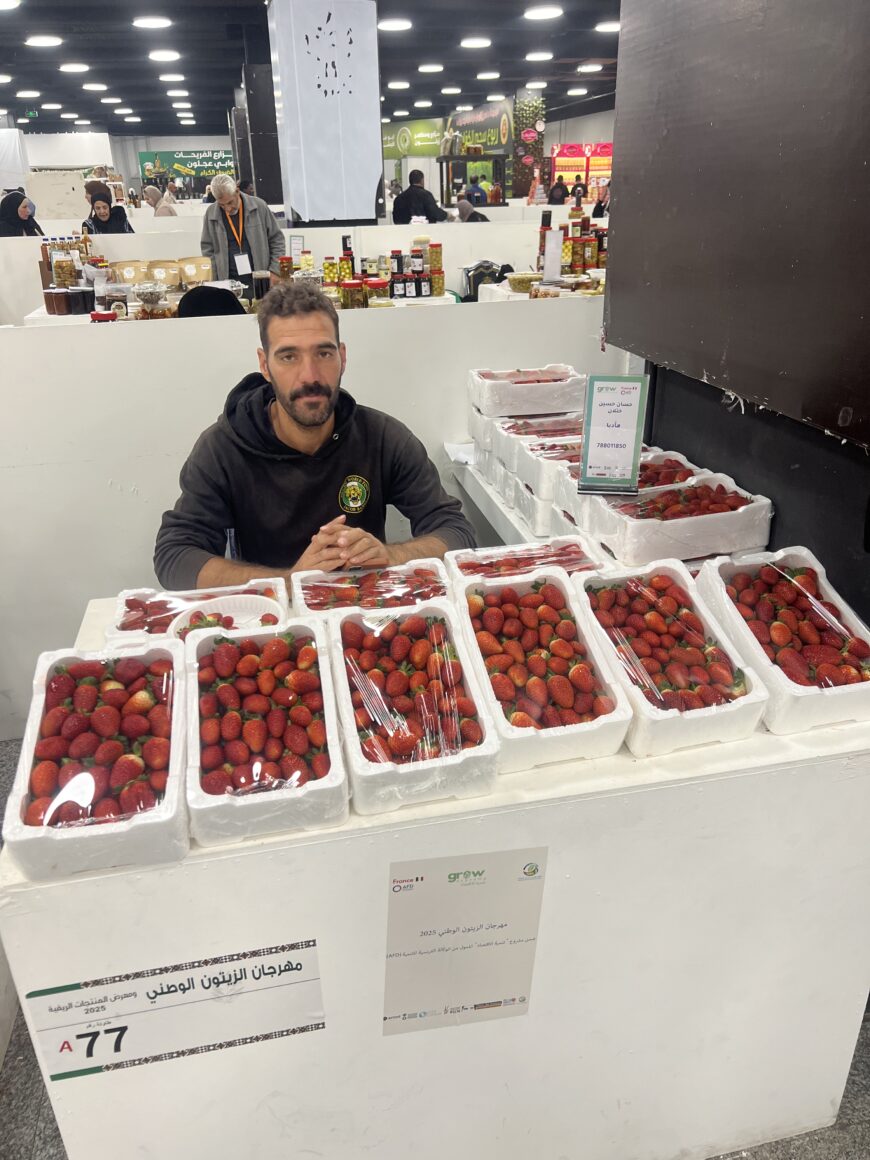
Hassan, a Syrian farmer living with his family of 3 members in Madaba for 12 years, had long relied on modest sales from his small strawberry farm, which included 3 greenhouses. With no formal agricultural training and limited knowledge of marketing, he often sold his produce on the side of the road or to neighbors, struggling to increase production or reach new customers. His farm held potential, but without proper guidance, he felt stuck.
Everything changed when he discovered the Grow Economy programme on social media. Excited by the possibility of gaining new skills and accessing national markets, he decided to apply. This decision marked the beginning of a transformative journey.
Through Acted’s targeted agricultural training, Hassan acquired enhanced farming techniques that improved the quality of his strawberries. The financial grant he received enabled him to purchase food processing equipment,including ovens, pots, and packaging containersto implement his business plan, focused on establishing a food processing project and producing strawberry jam. This initiative contributes to reducing post-harvest losses while representing one of the best post-harvest practices. Additionally, his participation in the National Olive Oil Festival provided a valuable opportunity to meet customers directly, understand their preferences, and showcase his strawberries professionally.
The results were tangible. During the event, Hassan sold 280 kilograms of strawberries and related products, earning 840 JOD and connecting with 4 new customers or vendors. For the first time, he felt confident not only in the quality of his crops but also in his ability to market them successfully.
Today, Hassan looks to the future with determination. He plans to continue developing his farm alongside his family, improve packaging and marketing solutions, and expand his customer base. With the knowledge, confidence, and market exposure gained through the programme, he proudly calls this his breakthrough moment.
Growing Beyond Expectations
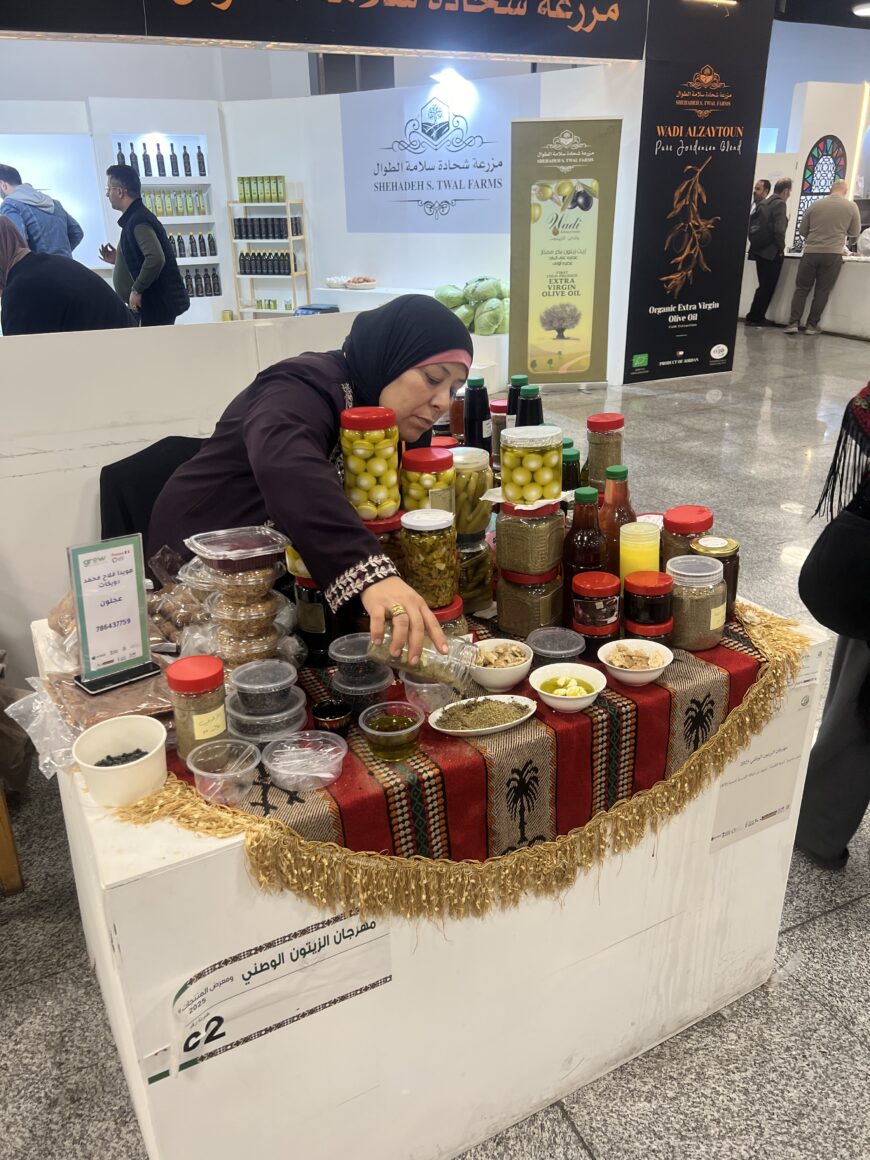
For years, Howaida, a 50-year-old Jordanian mother, devoted her days to caring for her family of 7 members while nurturing a flourishing home garden she had always seen as a personal hobby. Without her own source of income, she relied entirely on her husband’s earnings and often sold her herbs and homemade products on the side to neighbors or friends. She never imagined that the plants she lovingly tended could become the foundation of a sustainable business. Everything changed when she learned about the Grow Economy programme and, for the first time, began to see her garden as a real business opportunity.
Through the Grow Economy programme’s targeted training in business development, including marketing, cost calculation, customer engagement, home gardening, eco- tourism and packaging —paired with a financial grant, Howaida transformed her garden into a welcoming space where visitors could explore and purchase her herbs, fruits, and homemade products.
The grant allowed her to purchase many supplies and tools for her own project to be ready for visitors (e.g., tools, packaging materials, pots, serving ware, and equipment) and implement her business plan focused on establishing a traditional restaurant. She is utilising her historic residence in Ajloun Governorate, Jordan, as part of the local eco-tourism experience
Her participation in the National Olive Oil Festival provided a valuable opportunity to showcase her products to a wider audience. During the event, During the bazaar, Huwaida promoted her traditional kitchen in Ajloun, distributing numerous brochures and business cards to more than 100 visitors at the eco-tourism booth, in addition, she successfully sold various products from her collection during the event sold 350 JOD worth of products, and received feedback that helped improve her offerings. What began as a quiet hobby quickly evolved into a small but promising business. The shift brought more than income: it restored her confidence, strengthened her independence, and allowed her to contribute to her household’s finances.
Looking ahead, Howaida hopes to expand her customer reach, enhance her production techniques, and continue developing her skills. With pride and encouragement, she shares her message to other women:
Everyone should try, learn, and keep seeking new skills. Being productive is possible for anyone. Age and education should never be barriers.
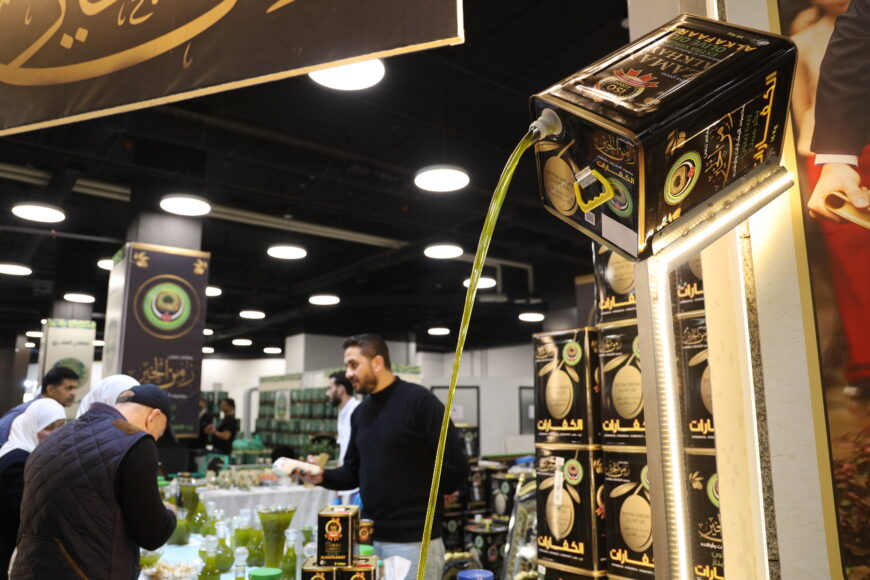
Hassan and Howaida’s stories illustrate the transformative impact of the AFD-funded Grow Economy consortium programme. Through targeted training, financial support, and direct market opportunities like the National Olive Oil Festival, the Grow Economy programme provided them —and others—with opportunities to strengthen their skills, gain confidence, and build sustainable income. By supporting the selected beneficiaries in Jordan, the initiative continues to foster resilience, promote economic inclusion, and create pathways toward long-term stability.
*Names have been changed to protect the participants’ privacy and confidentiality.