For over a decade, Yemen has faced one of the world’s most protracted humanitarian crises, marked by widespread displacement, loss of livelihoods, and the destruction of essential infrastructure. Following the 2018 escalation of conflict in Majzer District, Marib Governorate, thousands of families were forced to flee their homes in search of safety. Among them is Ahmed*, a father of three children.
Ahmed and his family resettled in Batha Al-Khalayt displacement site, an informal settlement located in the desert area of Marib. The site hosts around 181 displaced families (approximately 951 individuals) who live in makeshift shelters that provide minimal protection from harsh weather conditions.
Living in the Internally Displaced People (IDP) site is very challenging. The site is located in an open desert area, exposed to strong winds, which occur several times each month. These winds, combined with sand, often damage our shelter and make it difficult to live safely. Earning a stable income is very hard. I worry every day about keeping my family safe, warm, and healthy.
Rapid Floods
In August 2025, Marib experienced heavy rainfall and flash floods that severely affected Batha Al-Khalayt site. The floods not only destroyed and damaged shelters but also washed away many families’ belongings, leaving them without basic necessities. Acted’s rapid needs assessment found that six households had their shelters completely destroyed, while 105 others sustained partial damage.
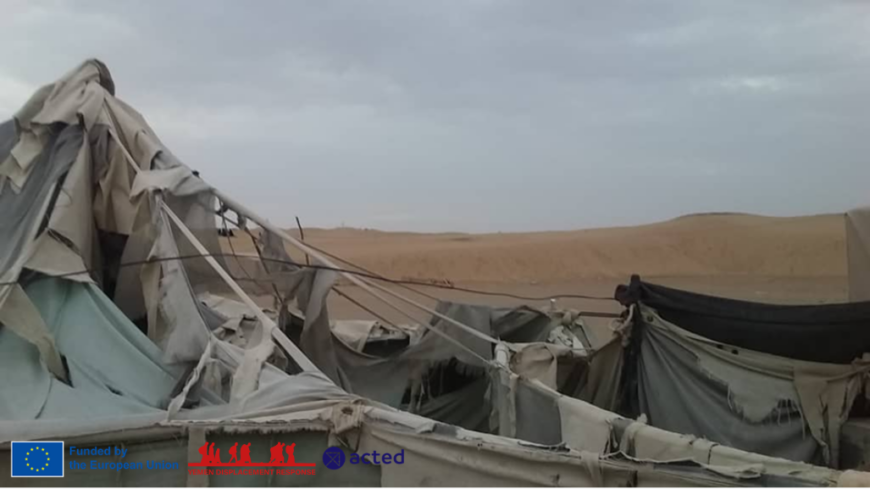
The damage to some shelters, Batha Al-Khalayt IDP site, Majzer district, Marib governorate, August 24, 2025
Ahmed’s family was heavily affected by the rainfall and floods, which damaged their shelter and exposed them to harsh weather conditions, including strong winds, sand, and cold temperatures.
Before Acted's intervention, our shelter was made of local netting and had been severely damaged by heavy rain and strong wind, providing very little protection from sandstorms and cold weather. We struggled to keep our children safe and warm, and everyday tasks like repairing the shelter or buying essential household needs were almost impossible due to limited resources.
Acted’s Emergency Response
In response, Acted, through the Yemen Displacement Response (YDR) Consortium, activated the Crisis Modifier under the European Union-funded project “Improving living conditions and supporting durable solutions for displacement-affected communities across Yemen“, to launch a Cash-for-Shelter Rehabilitation intervention to support the affected families. The activity provided conditional cash assistance to enable 50 families to purchase materials and repair or rebuild their shelters. In addition, as part of the same emergency intervention, Acted distributed Non-Food Item (NFI) kits, including essential household items such as water containers, mosquito nets, kitchen sets, mattresses, and blankets, to meet immediate household needs and improve the overall living conditions of 70 families.
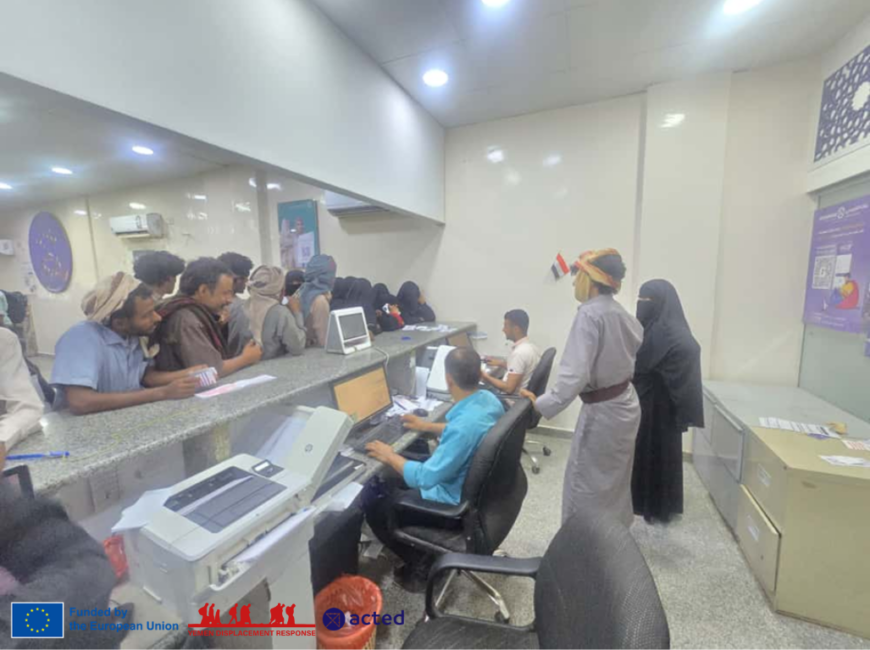
Cash for Shelter distribution, Marib Al Wadi district, Marib governorate, September 27, 2025
Through EU-funded assistance provided by Acted, Ahmed was able to rebuild his family’s shelter and strengthen it against the elements.
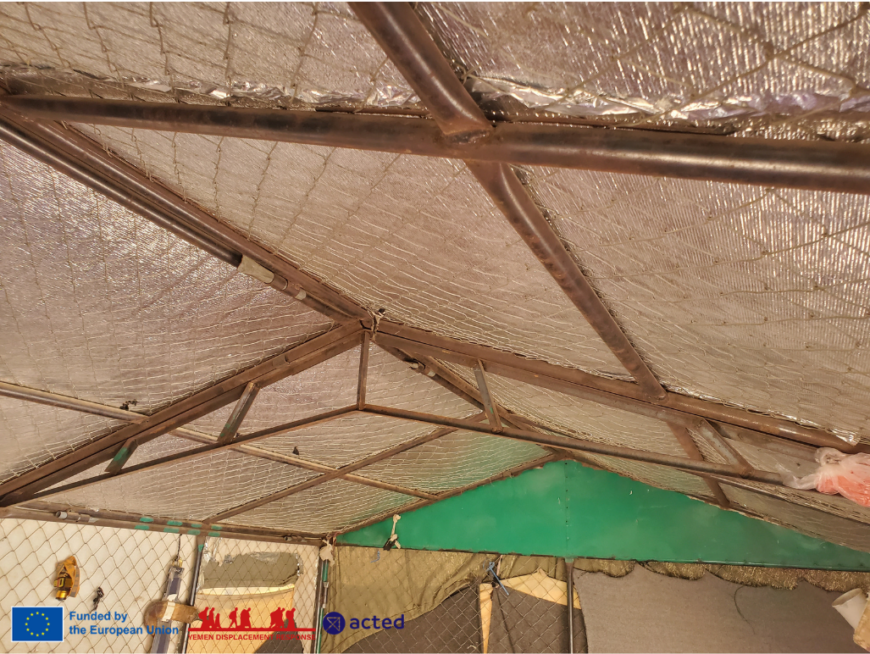
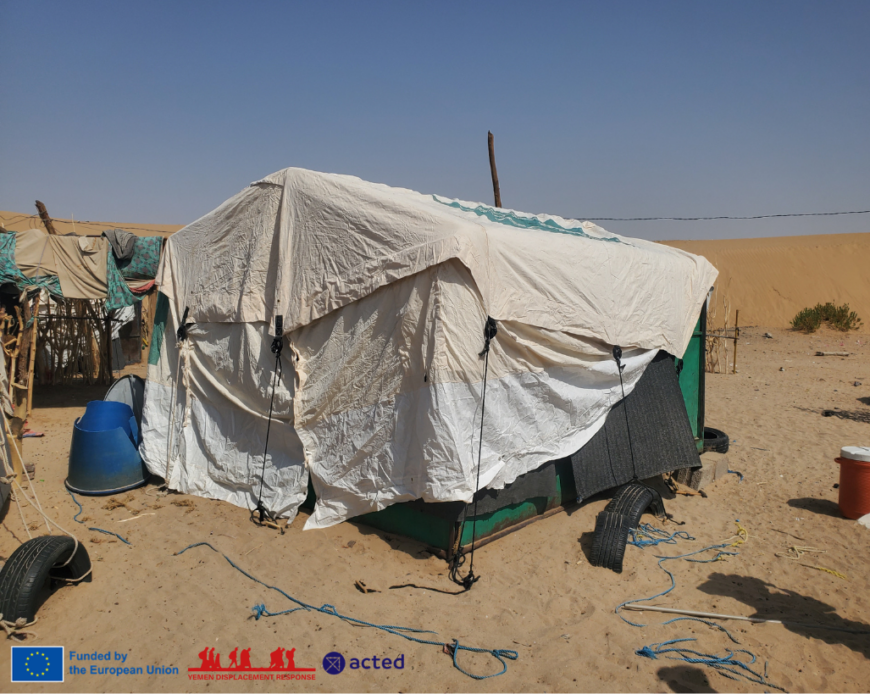
Installation of tarpaulins, Batha Al-Khalayt IDP site, Majzer district, Marib governorate, September 29, 2025
Through Acted’s support, we received cash assistance to repair and strengthen our shelter, which allowed us to rebuild it safely and more durably. Now my children can sleep safely again without worrying about the rain or the cold.
He added that the NFI kits helped them cover their immediate household needs, which allowed him to focus on providing food, education, and healthcare for his family. Beyond his family, Ahmed noticed a broader impact across the site.
Many households on the site who received support are now improving the overall safety and dignity of the community,” he said. “Families feel more confident and resilient in facing harsh weather.
Thanks to funding from the EU through its Humanitarian Aid Operations, Acted, a member of the YDR Consortium, provides integrated support, including site management, flood preparedness, shelter and NFIs, water, sanitation and hygiene (WASH), as well as protection services for vulnerable communities in Yemen. Acted has reached 88,908 internally displaced people and community members across six governorates: Marib, Aden, Al Dhale’e, Hodeidah, Abyan and Saadah.
*The name of the beneficiary has been changed to protect his privacy.