According to the latest WEF Global Risks Report, four of the five top risks we are likely to be faced with are related to the environment. The world’s poorest and most marginalised communities are already, and will be, the hardest hit by the effects of climate change, environmental crisis and their consequences.
Our Zero Exclusion, Zero Carbon, Zero Poverty vision compels us to “walk the talk” on climate change and the environment, that is:
- Take all necessary measures to reduce our climate and environmental footprint at both an organisational and operational level;
- Identify local and global solutions to climate change focusing on the most vulnerable, and;
- Upscale our programming related to fighting climate change and preserving the environment.
Acted’s 3ZERO vision aims at positively impacting the issues of exclusion, climate change and poverty, in line with the principles of the European Green Deal and the UN 2030 Agenda for Sustainable Development and the Sustainable Development Goals (SDGs): Zero Exclusion, because nobody should be left behind; Zero Carbon, because we only have one planet; and Zero Poverty, because everyone should have the opportunity to realise their potential.
As the environmental crises deepens, aid agencies such as Acted are faced with two simultaneous challenges. We must propose coherent and proactive actions to respond to this crisis and support populations to be more resilient (…) and we must positively contribute to the collective responsibility by greening our operations
Acted began this transition with its Greening Strategy 2021–2025, which established the foundations for change. Over this period, Acted institutionalised annual carbon footprint reporting, significantly reduced emissions from energy by 68% and travel by 53%, and doubled the share of climate and environmental programming within its portfolio. At the same time, the organisation strengthened its role in climate and impact finance, including accreditation to the Green Climate Fund (GCF), the issuance of a €10 million sustainability bond, and the expansion of green lending and blended finance initiatives.
Building on these foundations, the Climate and Environment Framework 2026-2030 marks a shift from incremental greening to organisation-wide transformation.
Driven by the ambition
“Act on climate crises, invest in climate solutions,”
the framework positions Acted as both an operational actor and a convener and catalyst, working to influence systems, mobilise partnerships, and unlock finance at scale, particularly in high-risk contexts where climate finance remains limited. Acted’s added value lies in its ability to operate across the full contiguum – from humanitarian response to development programming and investment – linking local knowledge, operational presence and financial innovation to scale solutions in contexts where few actors can operate effectively.
The framework provides a structured pathway to embed climate and environmental responsibility across programmes, operations, partnerships and investments, translating strategic commitments into a coherent and actionable approach.
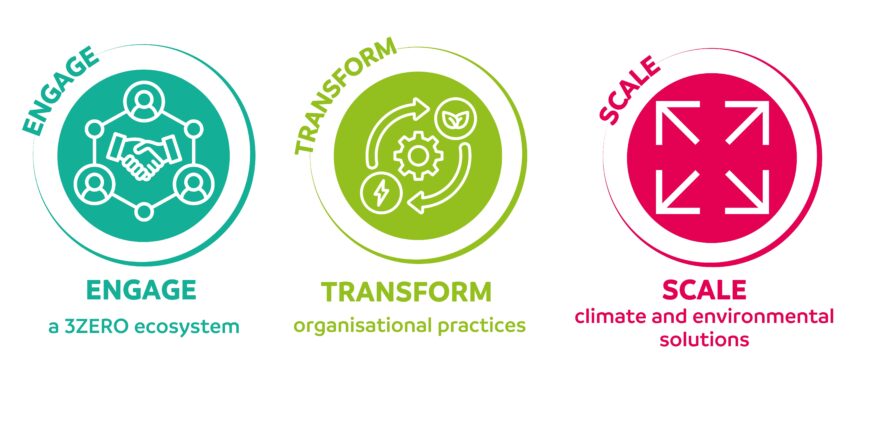
The framework is structured around 3 pillars