Over one million refugees from Ukraine have crossed into Moldova in search of safety since 2022, with an estimated 130,000 remaining in the country at the end of 2025 (UNHCR, 2025). For some, Moldova offers proximity to family members who cannot leave Ukraine, for others, it represents a return to places they were once familiar with, decades ago. In this landscape of movement, uncertainty, and resilience, Moldova has become a bridge between the past and the present for many families.
Among them is a woman who arrived in Moldova to care for her mother after they were separated by the sudden outbreak of war.
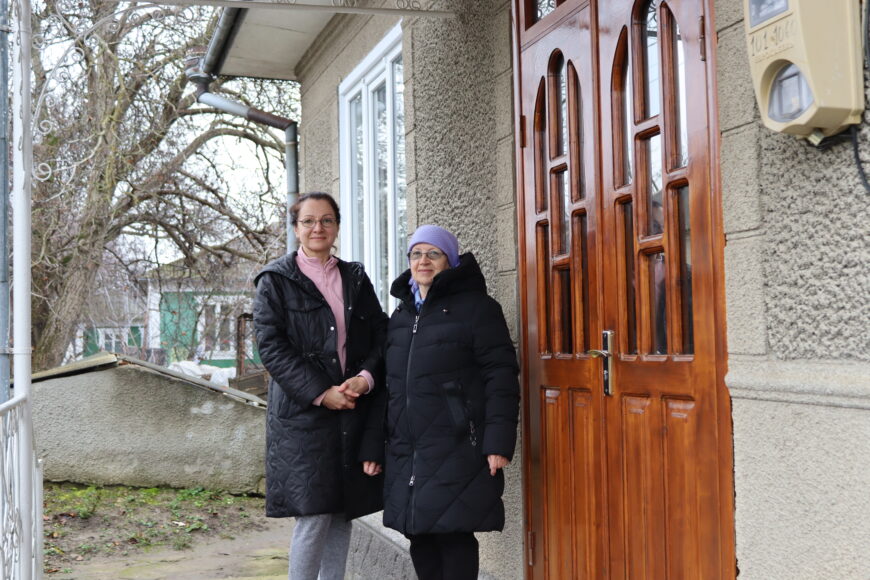
Nadiia* and her mother, Raisa*, found themselves in different parts of Ukraine when the conflict began. Raisa left her home with almost nothing:
She arrived with nothing more than the small handbag she was carrying.
Nadiia remained in Kharkiv for a short time, taking shelter underground with other families:
It was cold… many children… a shared toilet…
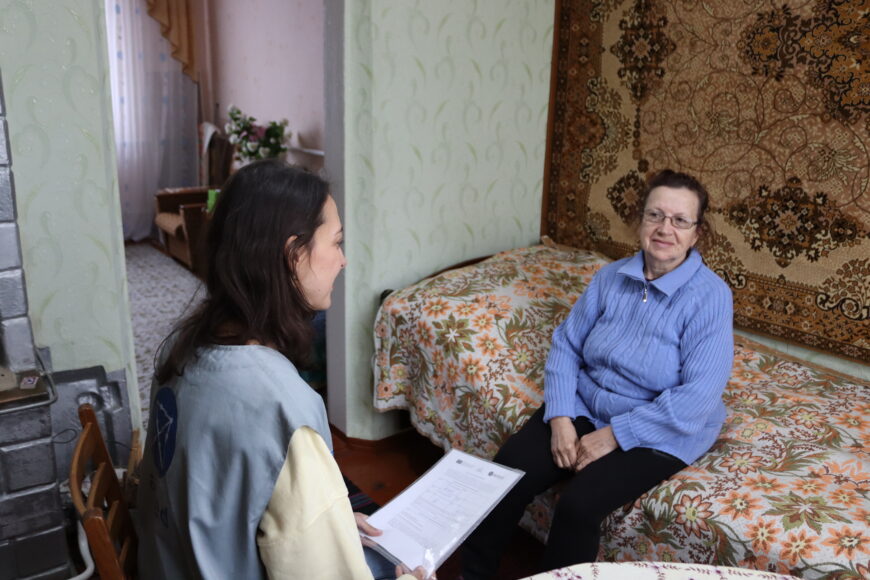
Her journey eventually led her westward, through Lviv and then into Poland, where she worked for some time.
Settling into a new chapter in northern Moldova
When Raisa’s health declined, Nadiia chose to move to Moldova to stay close and care for her. For the past year, they have been living together in the house of Raisa’s sister and her husband, gradually rebuilding a sense of stability.
Well, at the moment things are quite alright… housing is comfortable. The language is a challenge, yes, but we are learning little by little.
The house they live in had very old windows that no longer insulated the rooms. The frames were worn out, and the glass panes could no longer be replaced or sealed properly. The wooden windows, untouched for decades, no longer protected them from the cold:
We patched the frames with tape, but the wind still came through, and it was always cold.
As the winter approached, support came at a crucial moment. To reduce heat loss, Acted replaced three old windows with energy-efficient ones, helping the house retain warmth. As the house is an older building, the openings required non-standard solutions, and the new fittings were adapted to the existing structure. From the initial measurements to the final installation, the process took around three weeks and was completed before the winter, allowing the household to remain warm throughout the season.
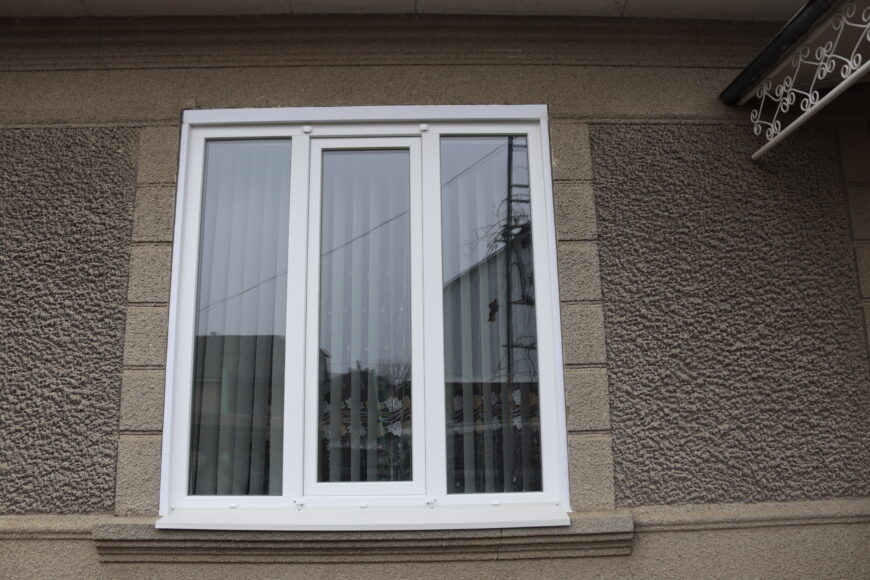
Improving living conditions ahead of winter
Through its light and medium shelter repairs programme, Acted supported improvements to several homes hosting refugees from Ukraine. Many of these houses are old structures that have not been renovated for years and require essential upgrades to ensure safe living conditions, especially before winter. In total, five houses were rehabilitated through the PLACE project, funded by the European Union, creating a warmer and safer environment for their residents.
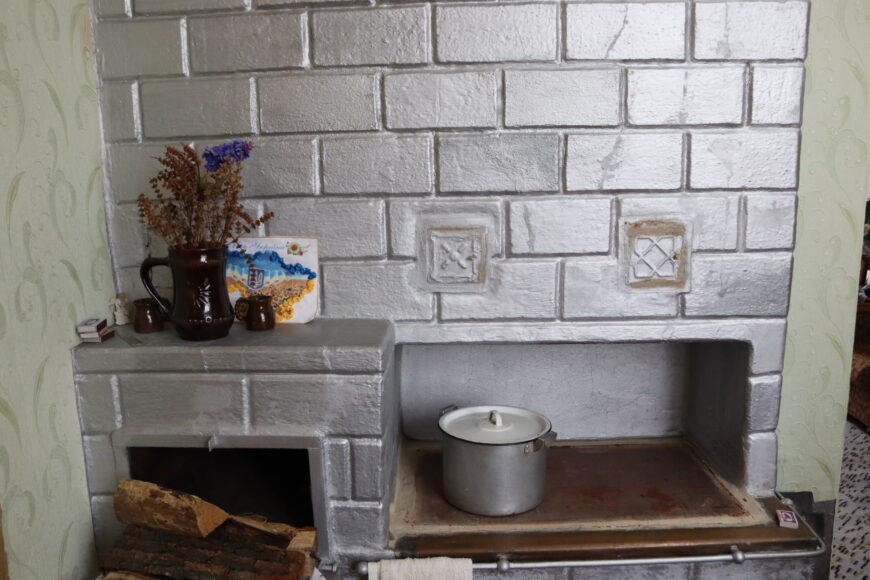
Before the repairs we had to heat the stove during the day as well, but now it’s enough to do it only in the evening.
To ensure all legal procedures were respected, the shelter upgrades were supported by the Norwegian Refugee Council (NRC), which provided Housing, Land and Property (HLP) expertise and legal assistance. This support helped verify property documents and ensured that repairs could be carried out safely and in compliance with legal requirements.
These activities are part of the PLACE II consortium, implemented by Acted, INTERSOS, the Norwegian Refugee Council (NRC), People in Need (PIN) and IMPACT Initiatives (through REACH), and funded by the European Union. Together, the partners work to improve living conditions for refugees and host communities across Moldova, providing dignified and adapted support where it is needed most.
*Names have been changed to protect individuals’ privacy.