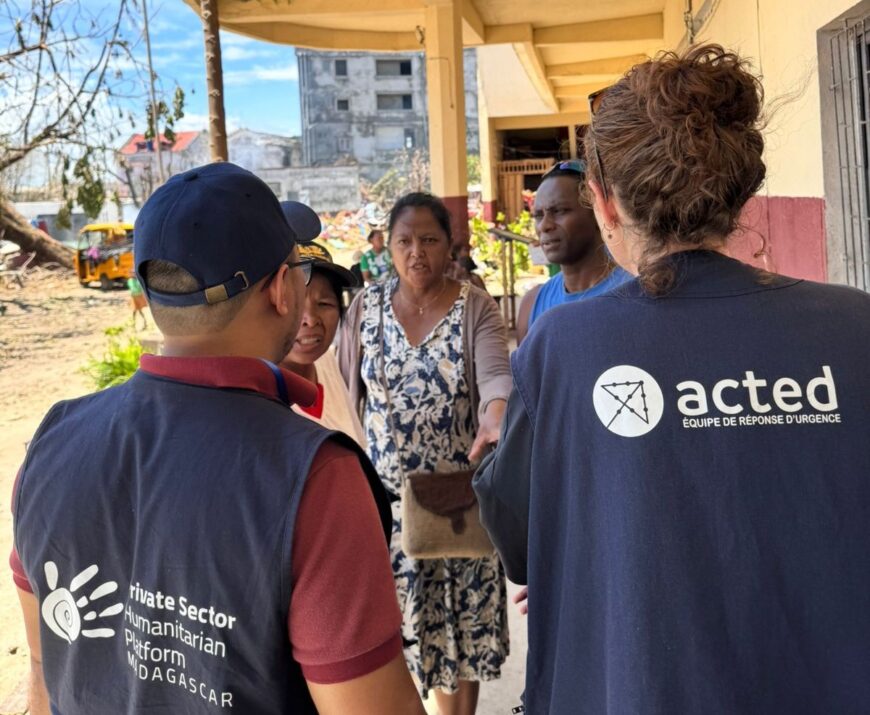
On 10 February 2026, Tropical Cyclone Gezani struck Madagascar, causing extensive damage in Toamasina (Tamatave), the country’s second-largest city with around 500,000 inhabitants. With winds reaching 250 km/h, it is one of the most powerful cyclones ever recorded in the region.
The provisional toll reports 59 deaths and over 800 injuries. More than 80,000 people have been evacuated and are now homeless, while 18,000 houses have been destroyed. Malagasy authorities confirm that 75% of Toamasina’s infrastructure has been destroyed or severely damaged. Aerial images show total devastation: roofs torn off, hundreds of trees uprooted, roads blocked by debris, and entire neighbourhoods submerged. In response, the government has declared a national disaster.
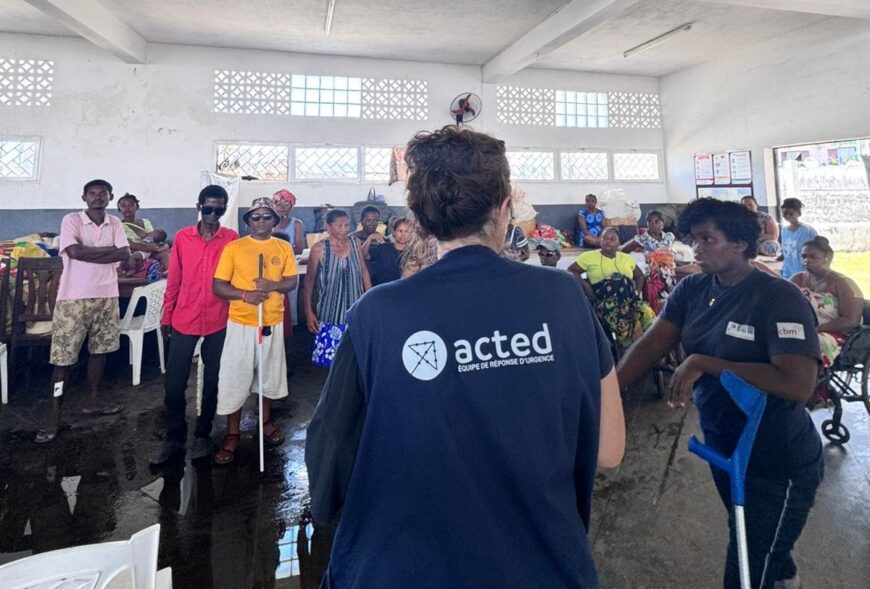
The port of Toamasina, the country’s main port, has also suffered heavy damage, threatening the delivery of international aid and supplies of food, medicine, and fuel. Access to the city remains extremely difficult, and many villages are isolated, lacking clean water, food, medical care, and safe shelter.
The President of Madagascar, Colonel Michael Randrianirina, launched an appeal for international solidarity on 11 February:
The current situation exceeds Madagascar’s capacity to respond alone.
France has announced the dispatch of food aid, rescuers, and firefighters from Réunion.
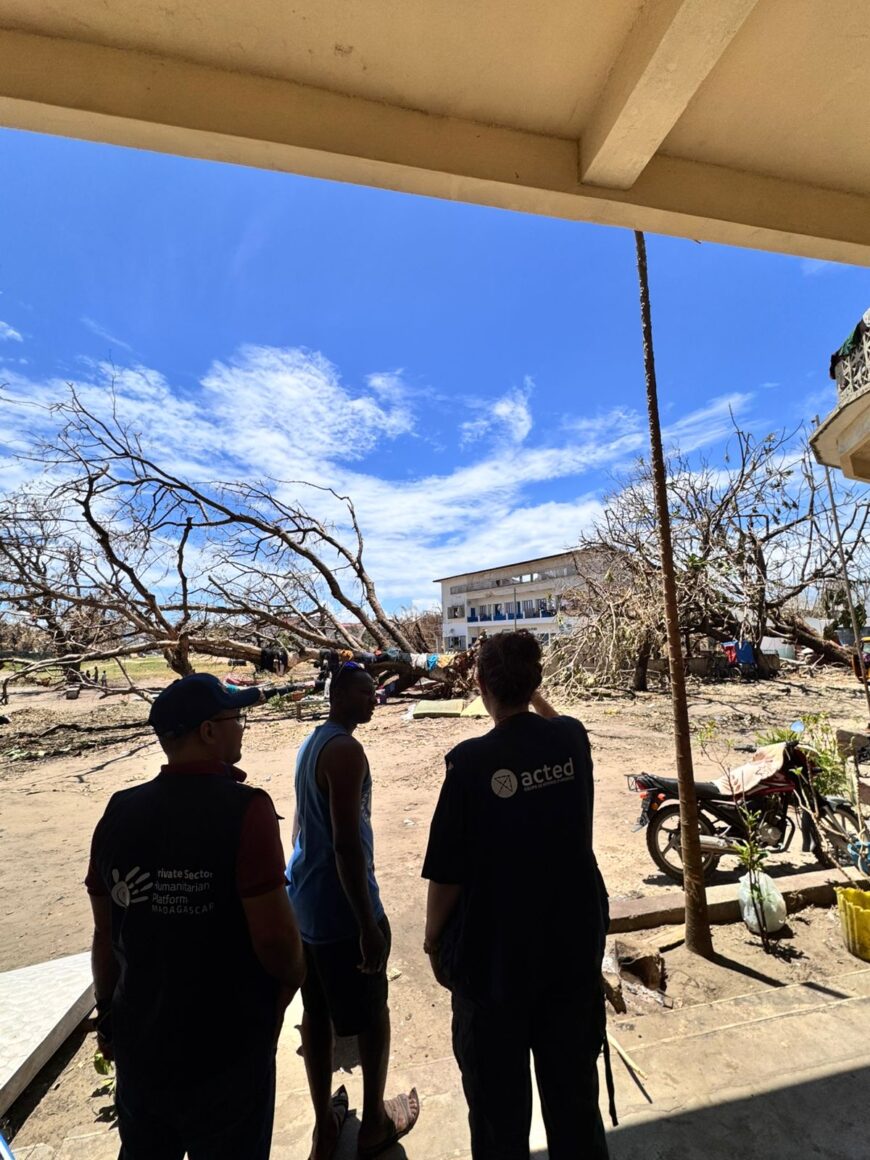
Emergency Response
In close coordination with the BNGRC, Acted is mobilising its emergency teams and local partners to assist affected families. Priority interventions focus on water, hygiene, sanitation, and food security. Aid includes:
Emergency food supplies
Hygiene kits
Emergency shelters and tents
Clean water and sanitation solutions
Non-food kits (warm clothing, blankets, mattresses…)
In the medium term, Acted will focus on rehabilitating critical infrastructure: schools, health centres, water and sanitation networks, and the port of Toamasina. Restoring livelihoods, especially for the 18,000 families who lost their homes, will also be a priority.