In Ouahigouya, in the Yaadga region, Acted has launched an ambitious project to restore hope to vulnerable communities.
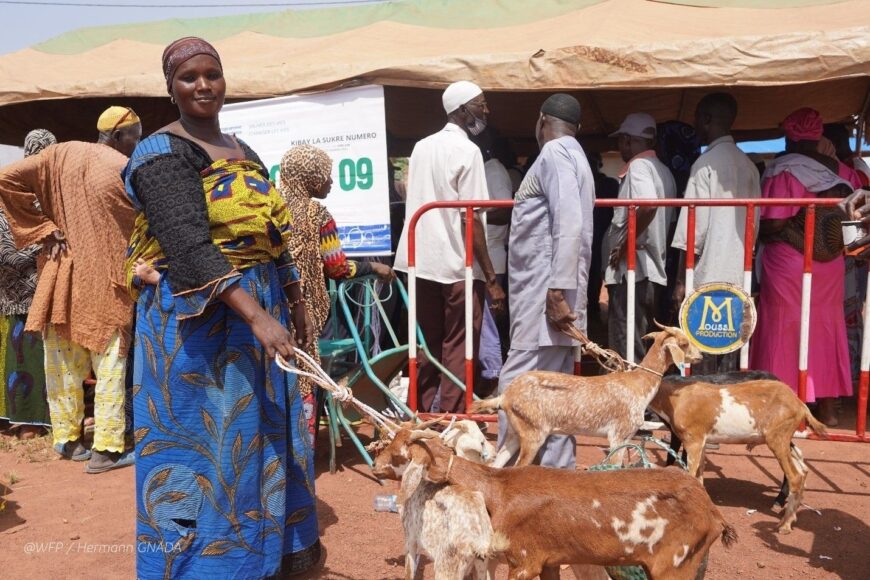
With support from the World Food Programme, more than 2,250 internally displaced persons and members of host communities have benefited from early recovery initiatives. Faced with the challenges of precarious living conditions, the aim of the project ‘Strengthening early recovery initiatives for vulnerable communities in Yaadga’ was to build the resilience of local populations and improve their livelihoods. To achieve this, Acted implemented several successful initiatives: income-generating activities (IGAs) in promising sectors such as Koko Dunda dyeing, Faso Danfani weaving, wire mesh manufacturing and small businesses, benefiting 150 people; the creation and support of three simplified cooperative societies with 100 members; the provision of 50 soilless farming kits to 165 trained producers and livestock farmers; and 115 kits with breeding stock for poultry and pastoral production and 15 breeding stock for sheep fattening. This project has enabled the creation and strengthening of five village committees, the technical training of beneficiaries and the distribution of complete kits to start their activities. This initiative paves the way for greater economic autonomy.
Before the project: a life marked by precariousness
Oumou*, a mother living in sector 12 of Ouahigouya, found herself unemployed and living a precarious life. Without any income-generating activity, she was entirely dependent on her household’s meagre resources, which made it particularly difficult to meet her family’s needs, especially her children’s education.
I used to work in the electricity sector. After I got married, I had to give up my livelihood because I felt it was no longer appropriate for a married woman.
An opportunity that changes everything
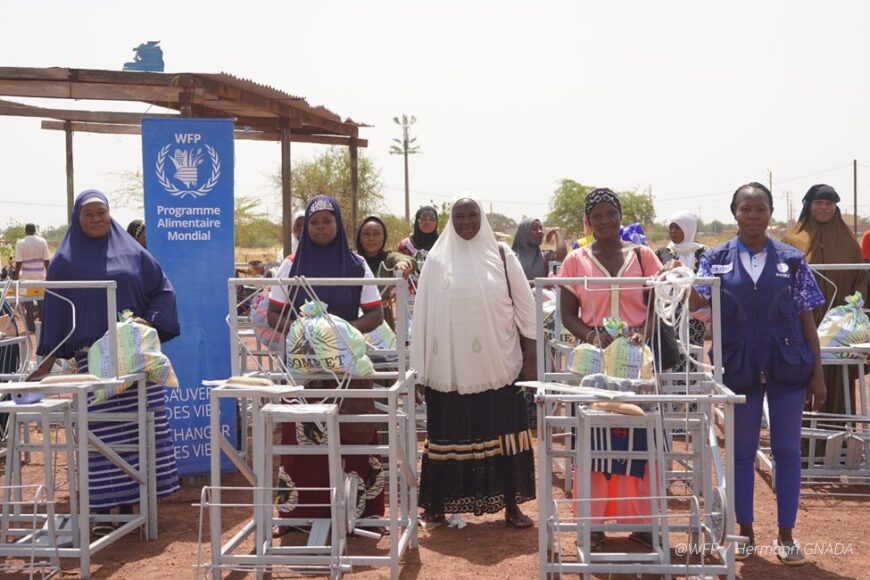
With the support of local authorities, Oumou and 314 other unemployed people are receiving vocational training and income-generating activity development support from the World Food Programme (WFP). As part of this programme, Oumou is consulted in the presence of a community selection committee. Each beneficiary had to choose a trade or activity based on their motivation, skills and/or market profitability. Oumou therefore chose to take up traditional Faso Danfani weaving.
It's an activity that was close to my heart.
Thanks to Acted, in September 2025, Oumou attended a training course at the Zoodo Vocational Training Centre, where she acquired valuable technical skills: thread preparation, weaving techniques and pattern design. Today, she has mastered several patterns and says she is proud of her expertise. Oumou received a complete kit to start her business: a loom, yarn and accessories. Thanks to this support, she can now produce traditional loincloths, which sell for between 7,500 and 12,500 CFA francs depending on the quality and investment.
This activity is profitable and allows us to support our families, contribute to expenses and avoid quarrels.
Oumou is already planning to perfect her techniques and collaborate with other beneficiaries to improve production.
The future ahead
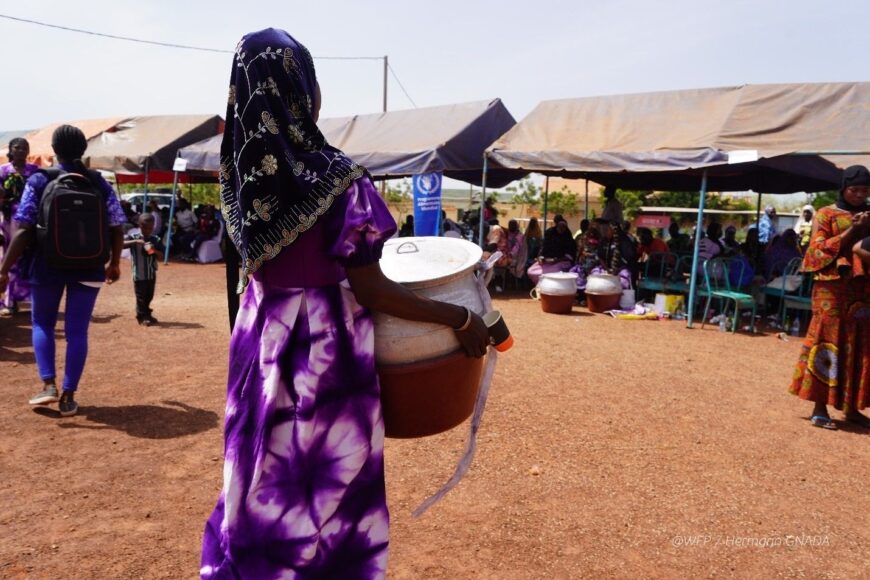
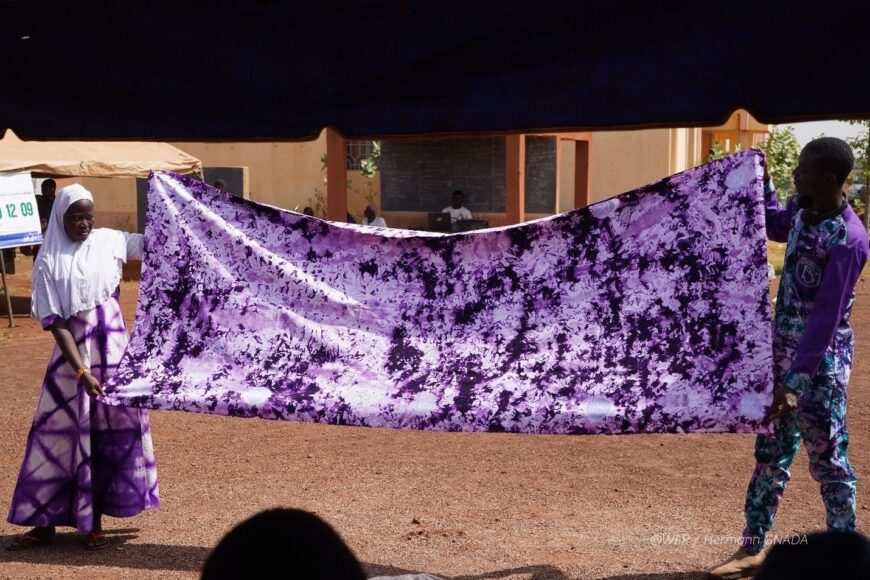
An initial ceremony to hand over 200 kits took place on 14 October 2025, chaired by the High Commissioner of Yatenga Province, the World Food Programme, the Provincial Directorate for Youth and Employment, and the Provincial Directorate for Agriculture, Animal and Fisheries Resources. In her speech, the representative of the High Commissioner of Yatenga Province praised this inclusive and concrete support for the empowerment of households in the municipality of Ouahigouya. Fifty more kits were handed over two months later during a second ceremony. These moments symbolise the transition to action: each beneficiary becomes an actor in their own resilience.
For Oumou, the future looks promising. She wants to develop her business, increase her income and, eventually, pass on her skills to others.
I hope that the cooperative we have set up will become a training centre and that I will be considered as a trainer for future beneficiaries of Acted projects. I will be very happy to support other women and girls in the same situation as me.
Through this project funded by the World Food Programme, Acted, alongside technical services, local authorities and community structures, has enabled 315 households to launch AGRs and agro-pastoral activities, strengthening their economic autonomy and resilience in the face of crises. These actions are not limited to one-off aid: they pave the way for sustainable development and greater social cohesion. By investing in training and equipment, Acted is empowering beneficiaries to build a more stable future for their families and communities. This success in Ouahigouya is concrete proof that, even in the most difficult contexts, hope can be reborn through solidarity and commitment.
*Names have been changed to protect the privacy of those supported.