In late 2024, armed clashes erupted in Luuq town, Gedo Region of Jubaland State, Somalia, due to land ownership disputes between local clans. As per the Joint Rapid Needs Assessment that Acted participated in December 2024, the violence resulted in civilian casualties and mass displacements, forcing over 5,000 households, approximately 30,000 people, to flee to Yurkud and nearby villages. The conflict has also severely restricted humanitarian access, disrupted essential services like water, sanitation, and hygiene (WASH), and lead to protection risks to women and girls.
To address this crisis and the urgent humanitarian needs, Acted carried out a rapid needs assessment (RNA) and activated an emergency response under the Integrated Response Framework (IRF), with the support from the European Union (EU). The IRF response was launched in 19 internal displaced persons (IDP) sites in Yurkud from December 2024 to February 2025, and triggered the immediate establishment of site management structures, and essential service delivery, including new arrivals tracking, information dissemination to the affected populations, complaint mechanisms, community governance structures set-up and training on key topics such as camp management essentials and role of committees in IDP settings, as well as in-kind distribution. This swift action aimed to ensure the safety, dignity, and wellbeing of the displaced population.
Delivering WASH support with a tangible impact in Bashiiro and Gumaray IDP Camps
Bashiiro and Gumaray IDP camps in Yurkud have struggled, since the inter-clan conflicts broke out in late 2024, with displacement and uncertainty becoming a way of life. As per the RNA conducted by Acted in Yurkud IDP camps, mass open defecation emerged due to the critical lack of sanitation support, such as the limited access to proper latrines. Open defecation is not just a sanitation issue, but a public health crisis. When human waste contaminates water sources and living areas, it rapidly spreads diseases such as cholera, diarrhea, and intestinal parasites. These risks are especially severe in densely populated areas, where improper sanitation practices can lead to rapid and widespread outbreaks. Bashiiro and Gumaray camps were thus identified as priority areas due to the huge influx of displaced population and the gaps in sanitation access.
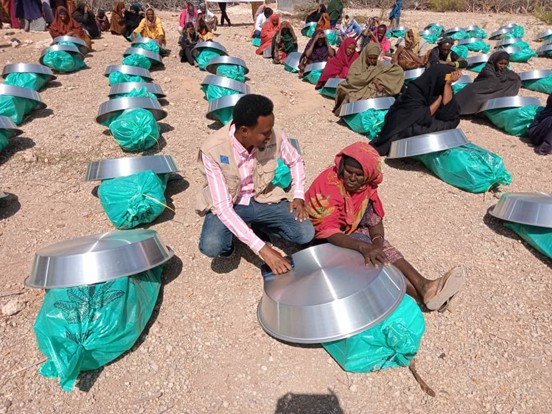
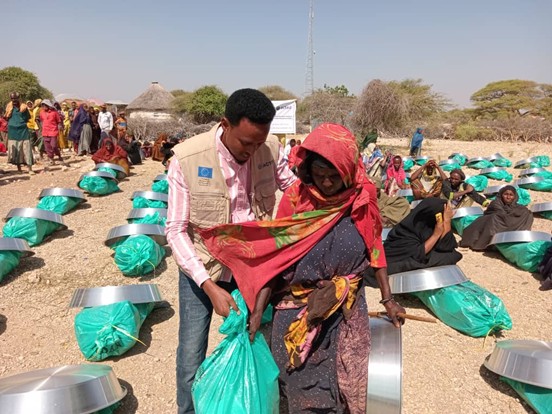
Through the IRF response, Acted finalised the construction of 30 latrines across Bashiiro and Gumaray camps in January 2025, transforming sanitation access for hundreds of families and decreased open defecation practices and related environmental damage. The latrines did not just offer cleanliness but also restored privacy and dignity to ensure better living conditions for the community. In parallel, Acted mobilized 700 hygiene kits from the Somalia WASH Cluster and distributed them to selected households. The households were selected based on vulnerability criteria, e.g., prioritising elderly and/or persons with disabilities; those affected by water-borne diseases and those with poor access to water. Beginning on December 20, 2024, each household received kits comprising of soap, water purification tablets, jerrycans, buckets, and menstrual hygiene materials. These items helped reduce the risk of disease and empowered families to maintain basic hygiene in crowded camp conditions.
Said* came to the Bashiiro IDP camp when it was set up upon the displacements, as an IDP himself, and has lived in the camp ever since.
The latrines provided by Acted have significantly improved our living standards in the Bashiiro IDP community. Before their installation, we faced challenges of open defecation in the camp, which posed serious health risks. Now, with access to these latrines, we enjoy a cleaner environment, leading to better hygiene and sanitation. This change has been especially beneficial for women, providing them with the privacy and security they need. Additionally, the presence of hand-washing facilities near the latrines encourages good hygiene practices, enhancing the overall health and dignity of our community.
A holistic and duplicable solution to address needs in displacements
Yet, good hygiene does not end with direct WASH support, it also requires a clean, safe, and organized living environment embedded with community-led governance.
As part of the IRF approach, Acted complements WASH support with Camp Coordination & Camp Management (CCCM) programming through the establishment of site-level coordination structures, regular site monitoring, new arrivals registration, hygiene promotion, and site maintenance and improvement activities with the Cash-for-Work modality.
The emergency-based CCCM programming ensures that the WASH improvements do not end with infrastructure and puts people and systems in place to maintain the impact. For example, the community dialogues and hygiene promotion reinforced behavioural change for better health outcomes. Also, the establishment of community governance structures combined with maintenance training and toolkits have enabled the community to repair and sustain WASH infrastructures independently. The community governance structures were established with an emphasis on the diversity of representation, and include men, women, persons with disabilities, youth, and minority groups.
With this successful activation, the IRF approach has been tested and is currently replicated in Afmadow District, Jubaland, where the intensified drought conditions affected rural communities and led to significant displacements.
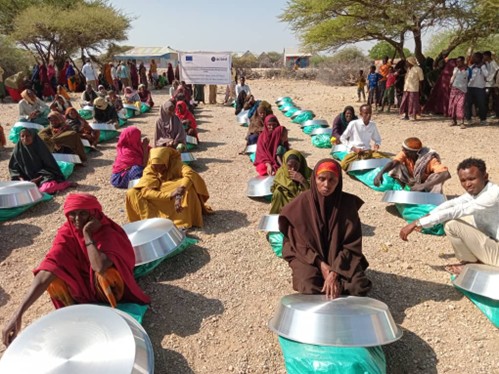
The emergency WASH response, complemented by CCCM programming, in Bashiiro and Gumaray IDP camps has demonstrated how timely and coordinated action can make a lasting difference in times of crisis.
Thanks to EU’s funding, Acted will continue to support immediate crisis relief with a holistic and replicable solution, empowering affected communities and laying foundation for sustained impact.
*Names have been changed to protect individuals’ privacy.